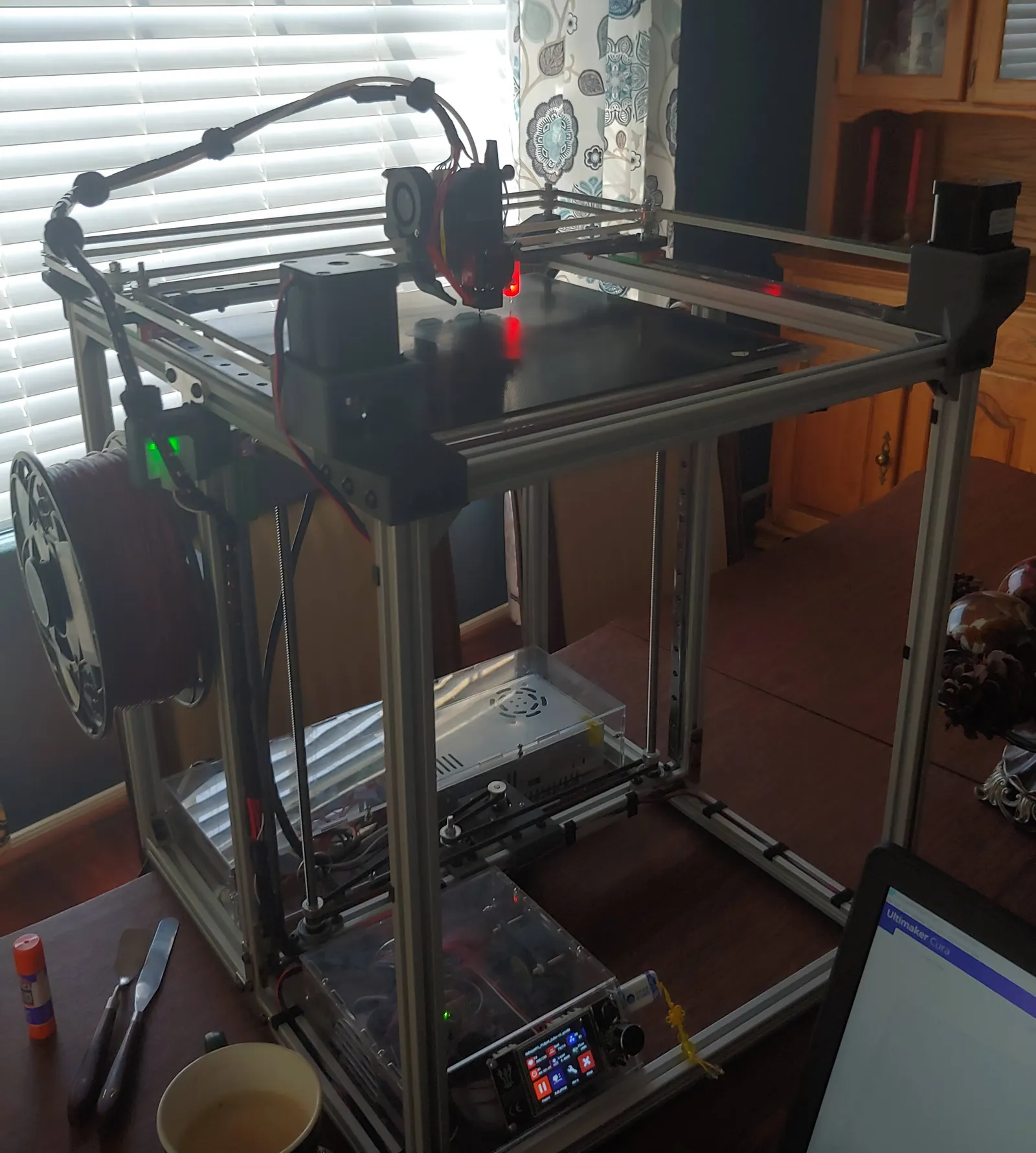
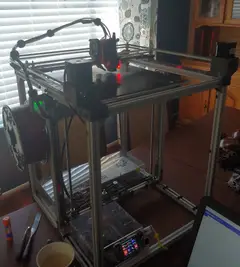
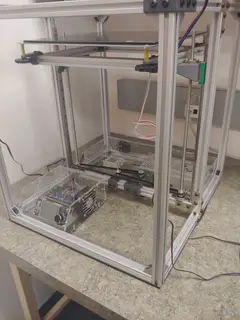
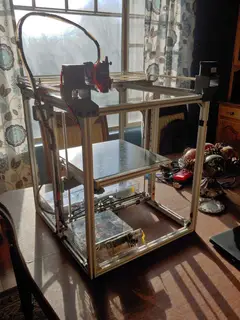
Completed custom 3D printer build
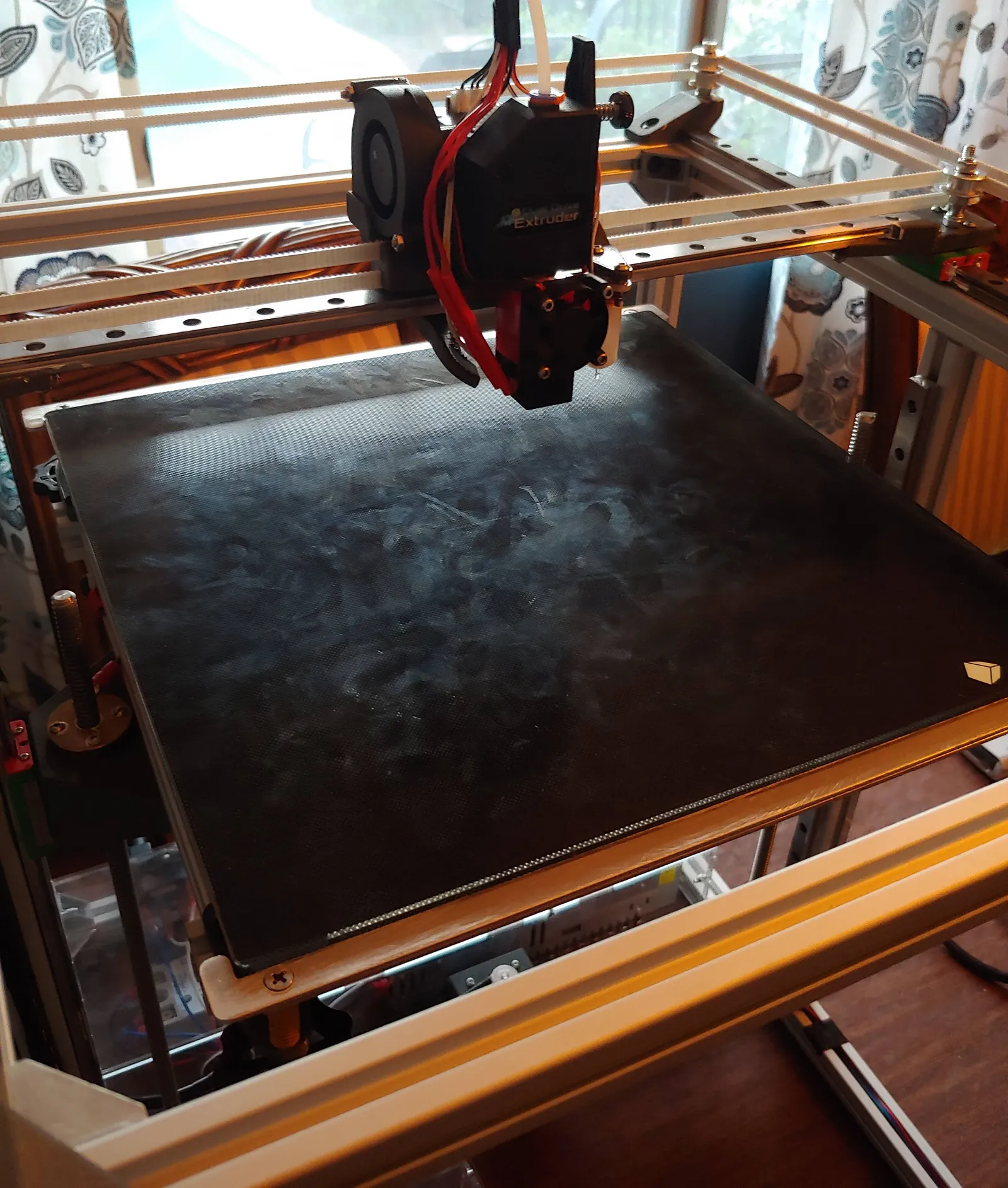
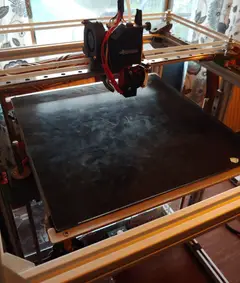
The printer sports linear rails on all axes, and a removable glass build plate. The platform is heated using a 750W AC heater
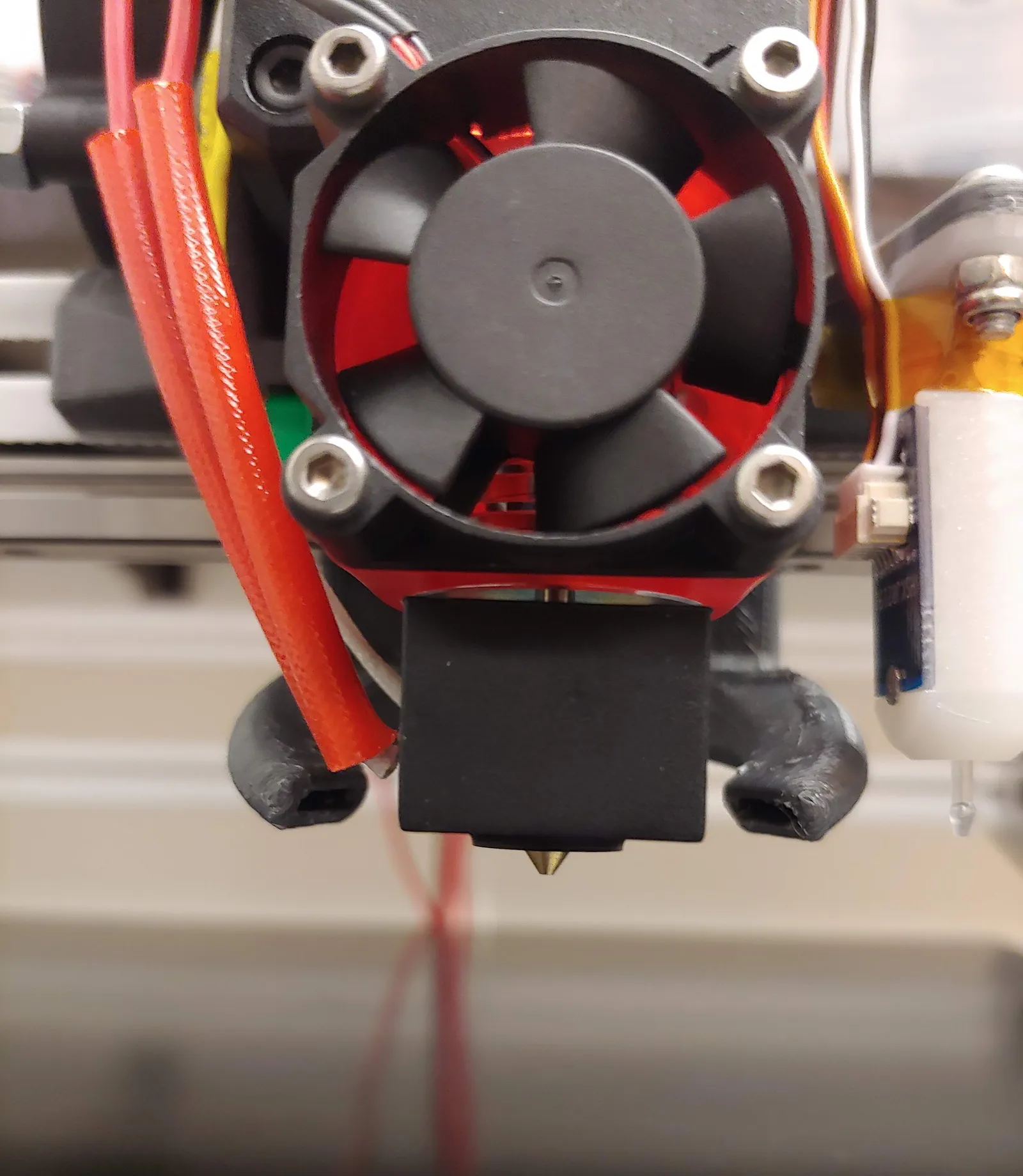
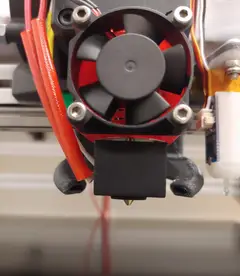
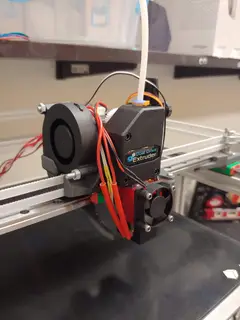
Hotend and nozzle of the print head, with the custom part cooling duct blowing air from either side
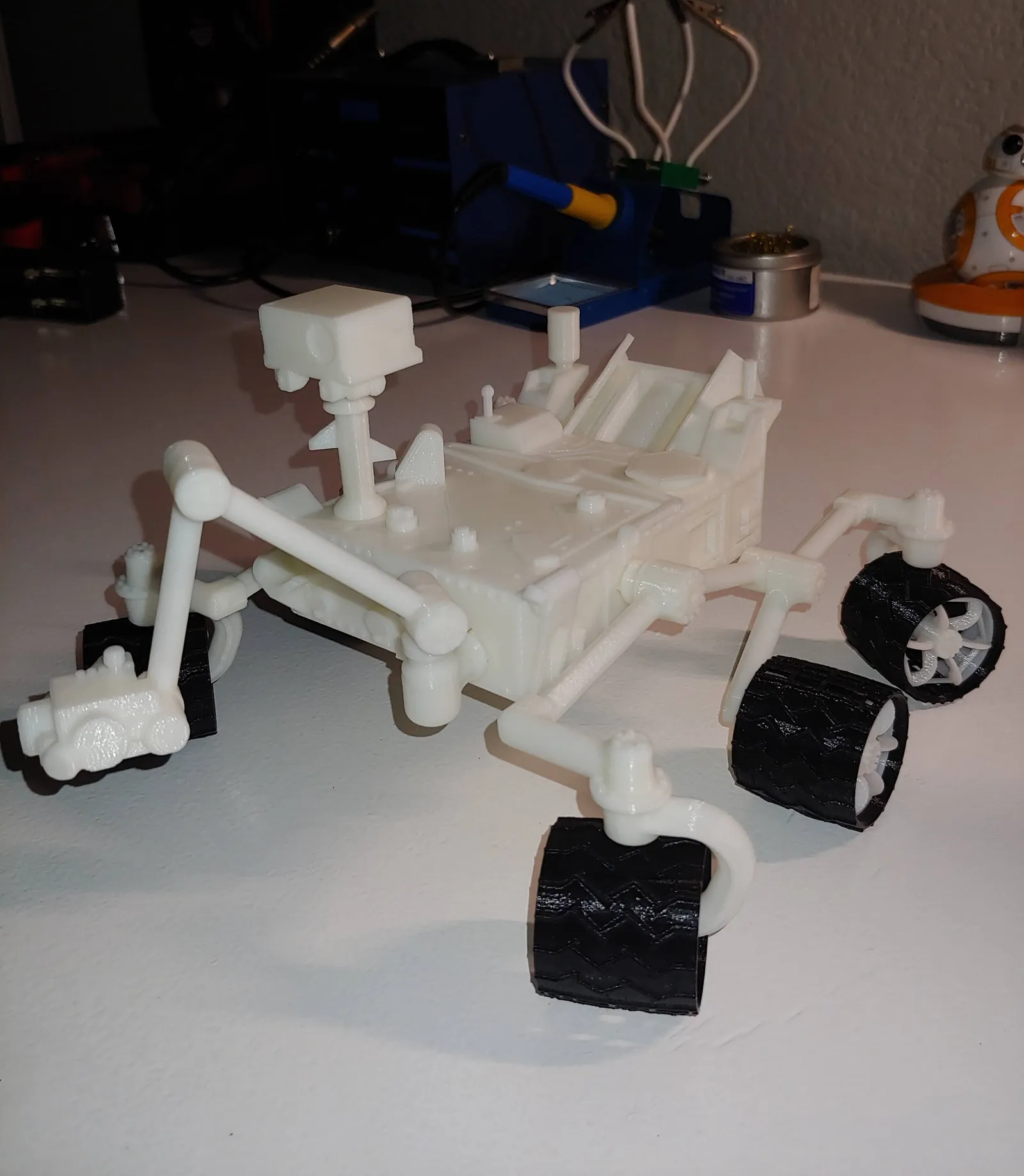
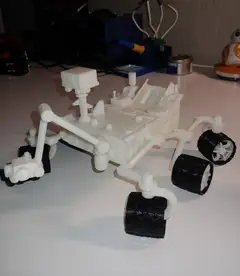
This Perseverance rover model was one of the first that I made on the custom printer. All the small white pieces used for the various joints and linkages were printed in a single job
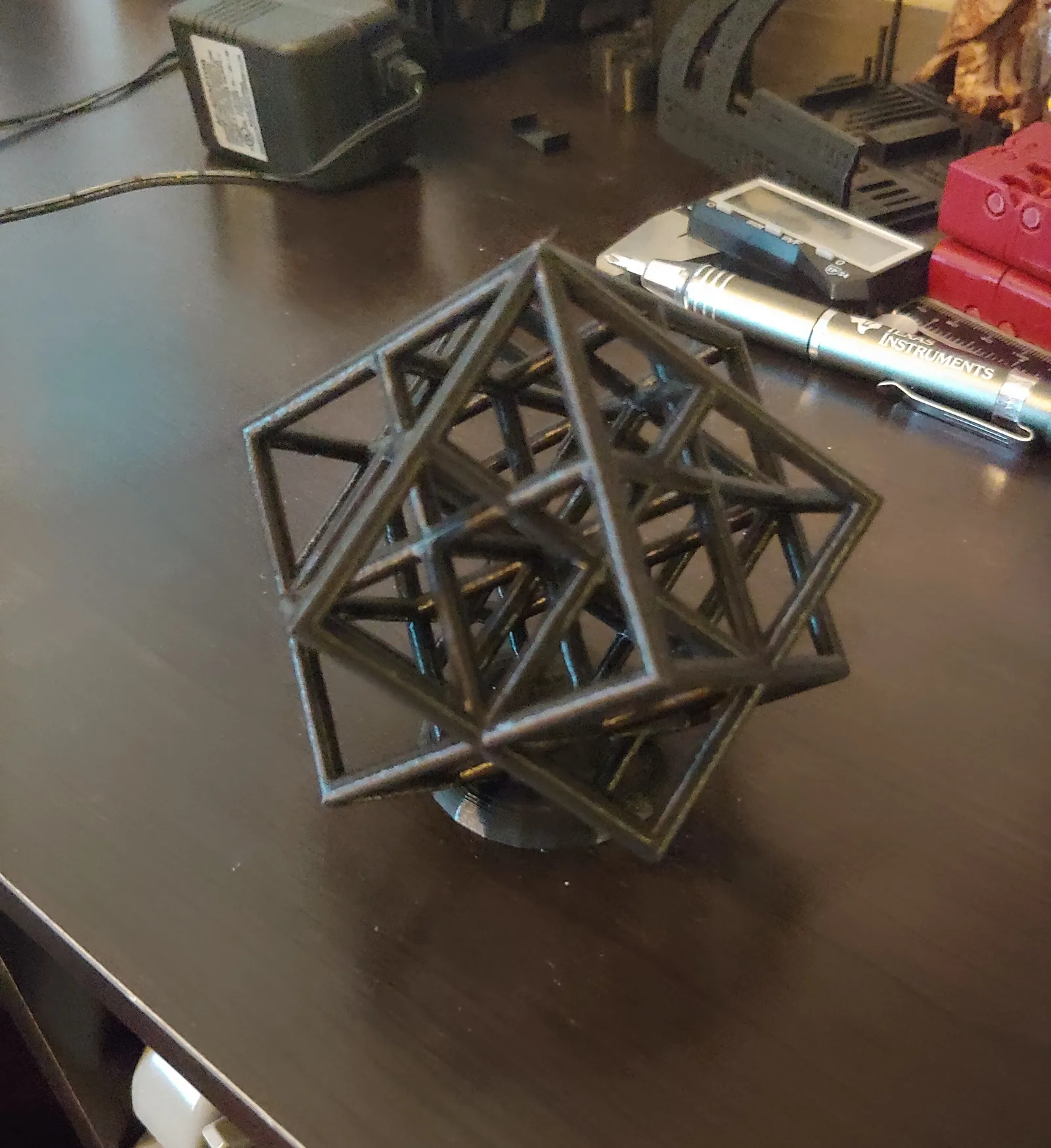
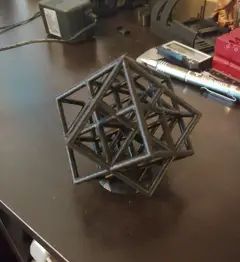
This lattice torture test print was used to evaluate overhang, stringing, and retraction performance. This result is almost perfect, with only a few small strings and surface artifacts
Custom 3D Printer
A custom-built 3D printer featuring coreXY kinematics, auto-bed-leveling, a direct drive extruder, an AC-heated build plate, and linear rails on all axes
Specifications
Features
- Linear rails on all axes for maximal rigidity and precision
- Direct drive extruder for better filament control, especially with flexible filaments
- Auto-bed-leveling using a BLTouch sensor
- Filament run-out sensor
- 750W AC heated bed, with glass and flex PEI build platform options
Loading 3D viewer...
The printer was fully modeled in a Solidworks assembly of 200+ parts. The motor brackets were revised from the initial version shown in other pictures
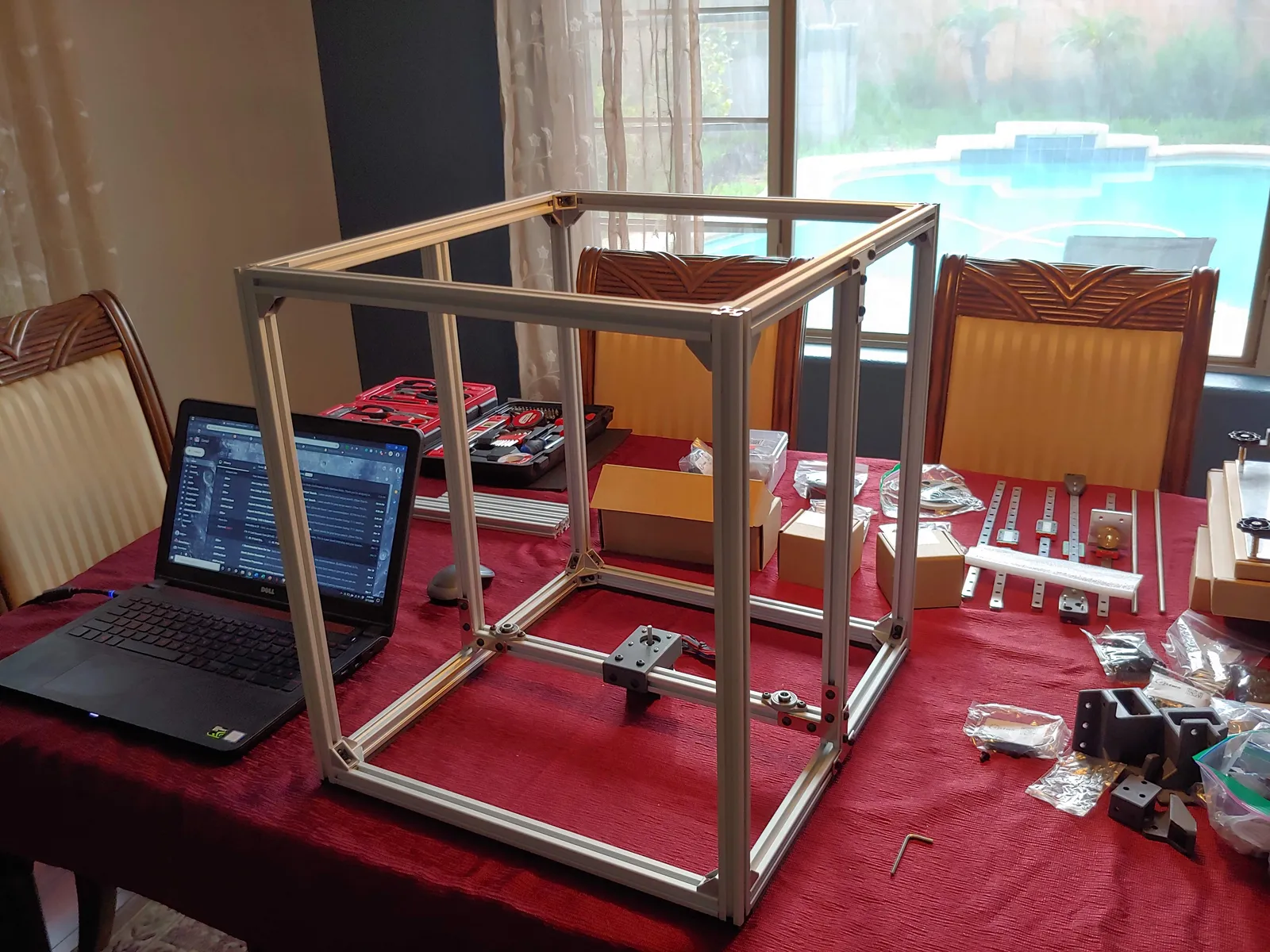
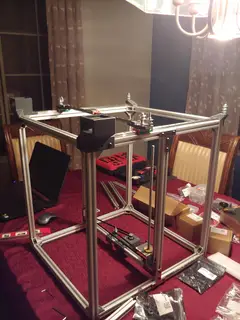
The build began with the frame, which is made from 2020 aluminum extrusion and COTS brackets
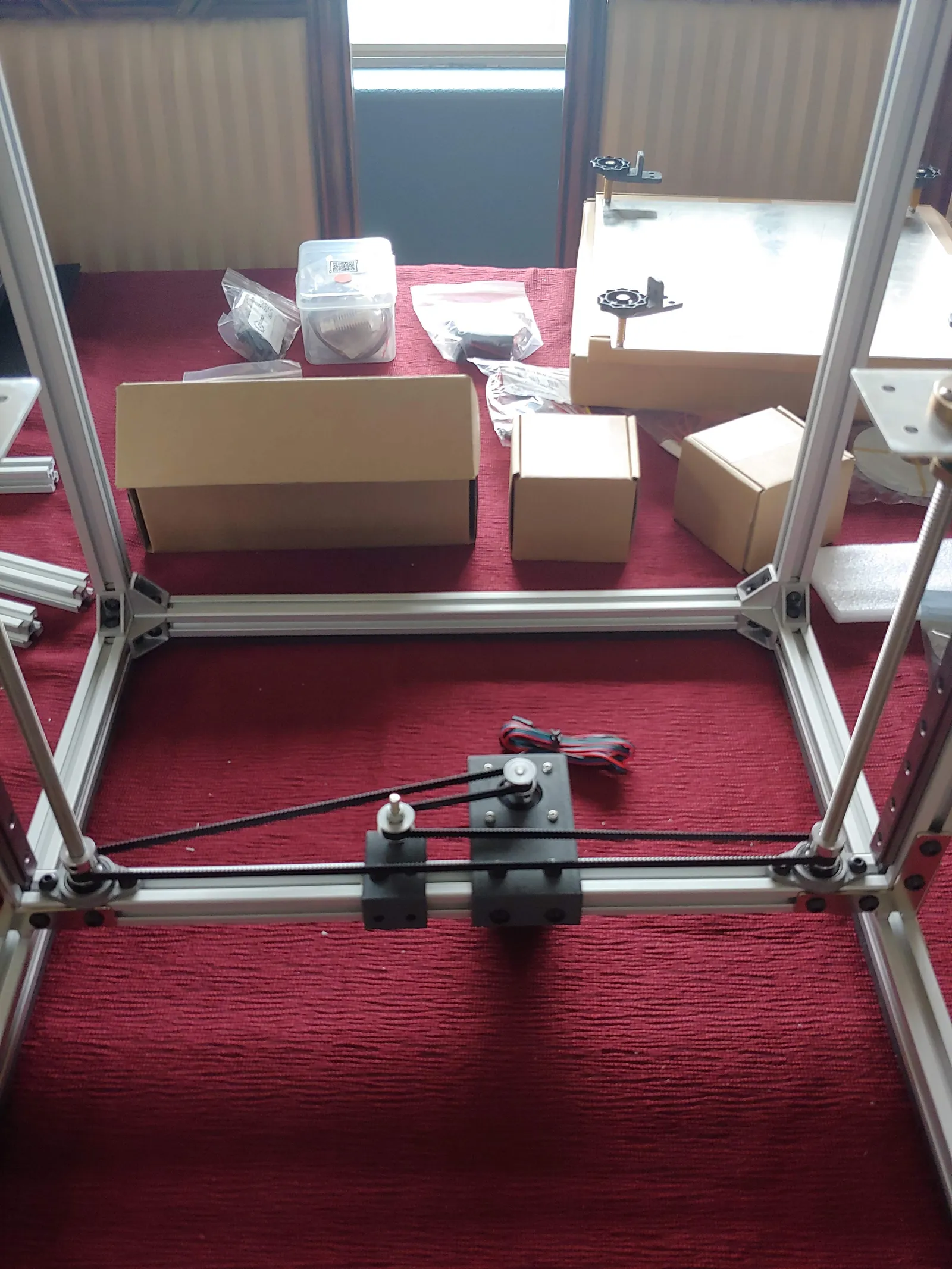
Initial assembly of the Z-axis belt-driven leadscrew mechanism. The printed brackets can be positioned on the extrusion to set the belt tension
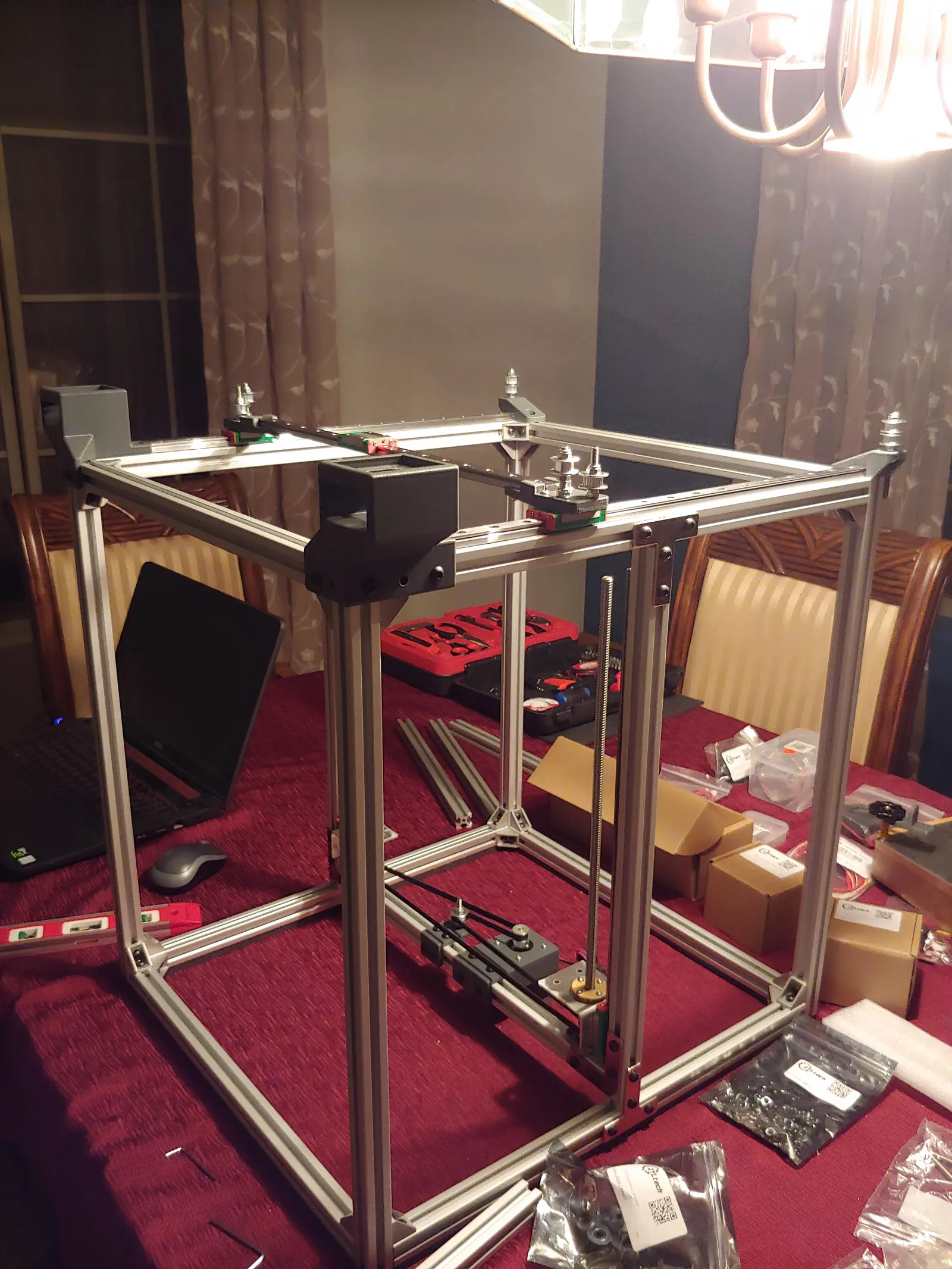
Getting the linear rails, coreXY pullies, and motor brackets mounted
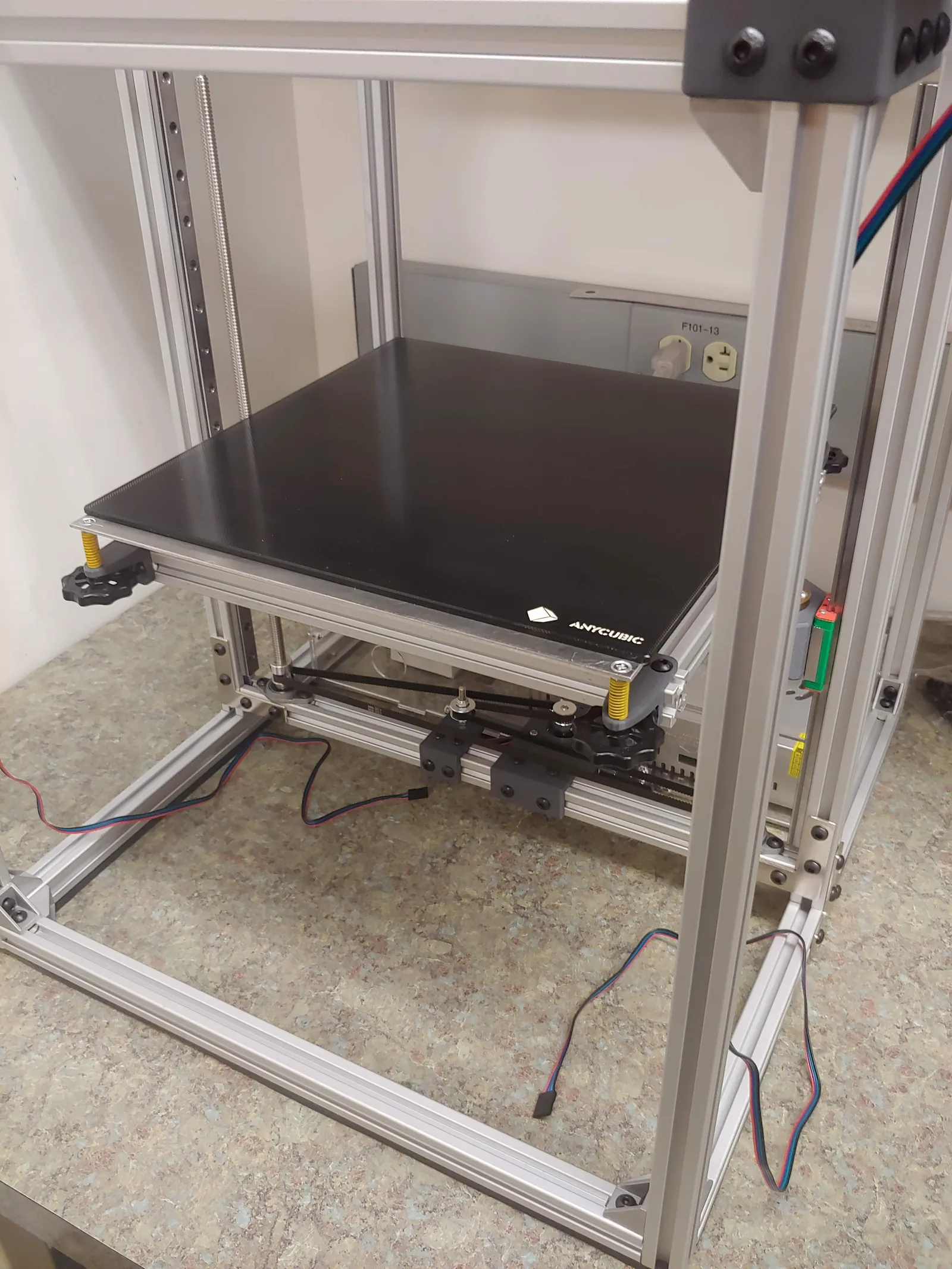
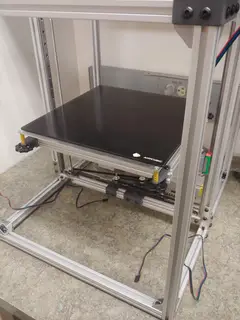
The glass build platform rests on an aluminum plate with a 750W silicone heater pad on the bottom. This plate mounts to the sub-frame with stiff yellow springs in each corner, so the bed can be coarsely leveled
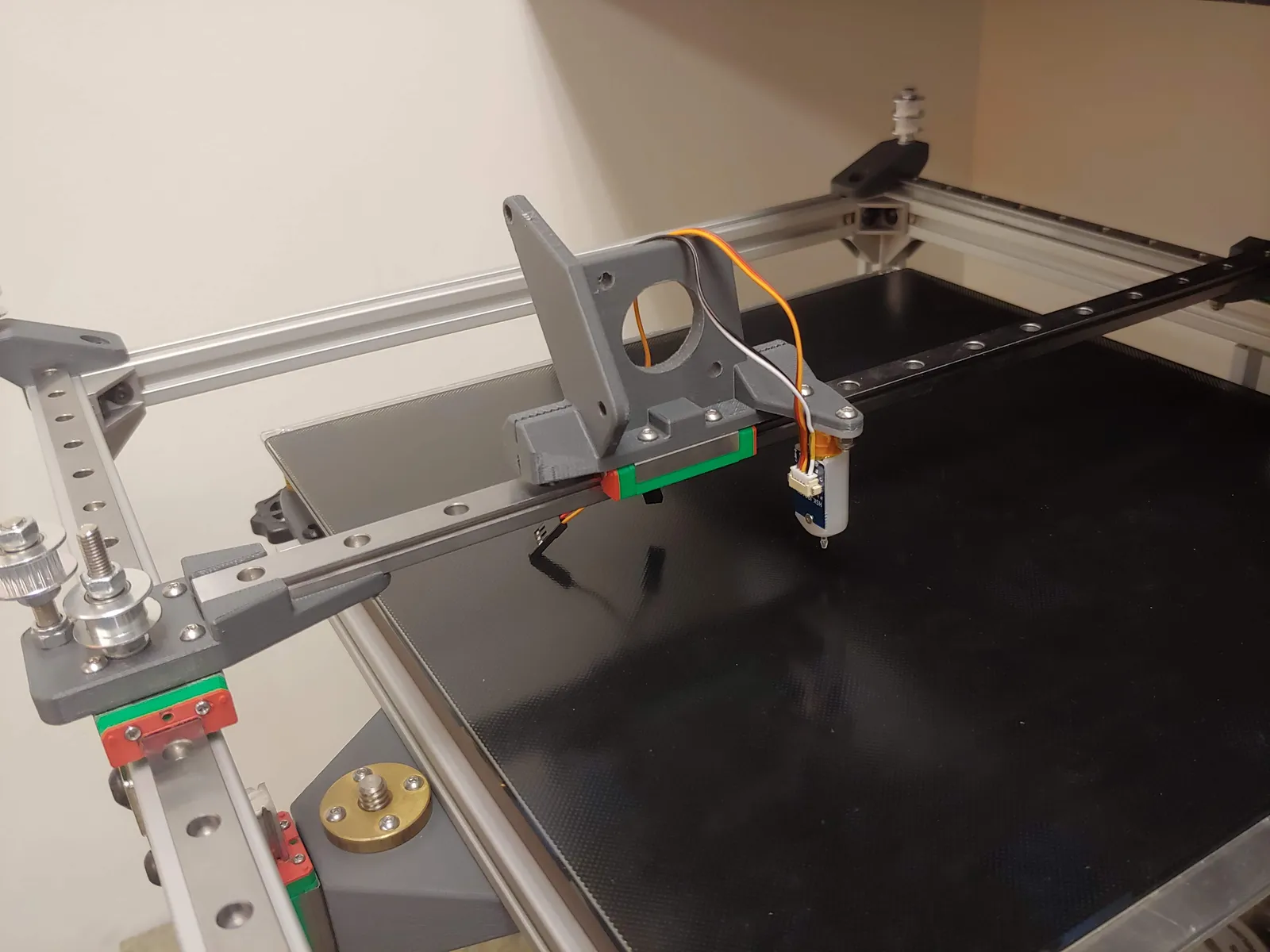
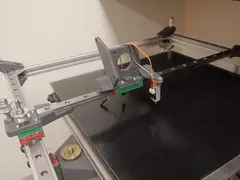
Starting the print head assembly with a bracket to mount the extruder / nozzle, the touch probe, and a cooling fan
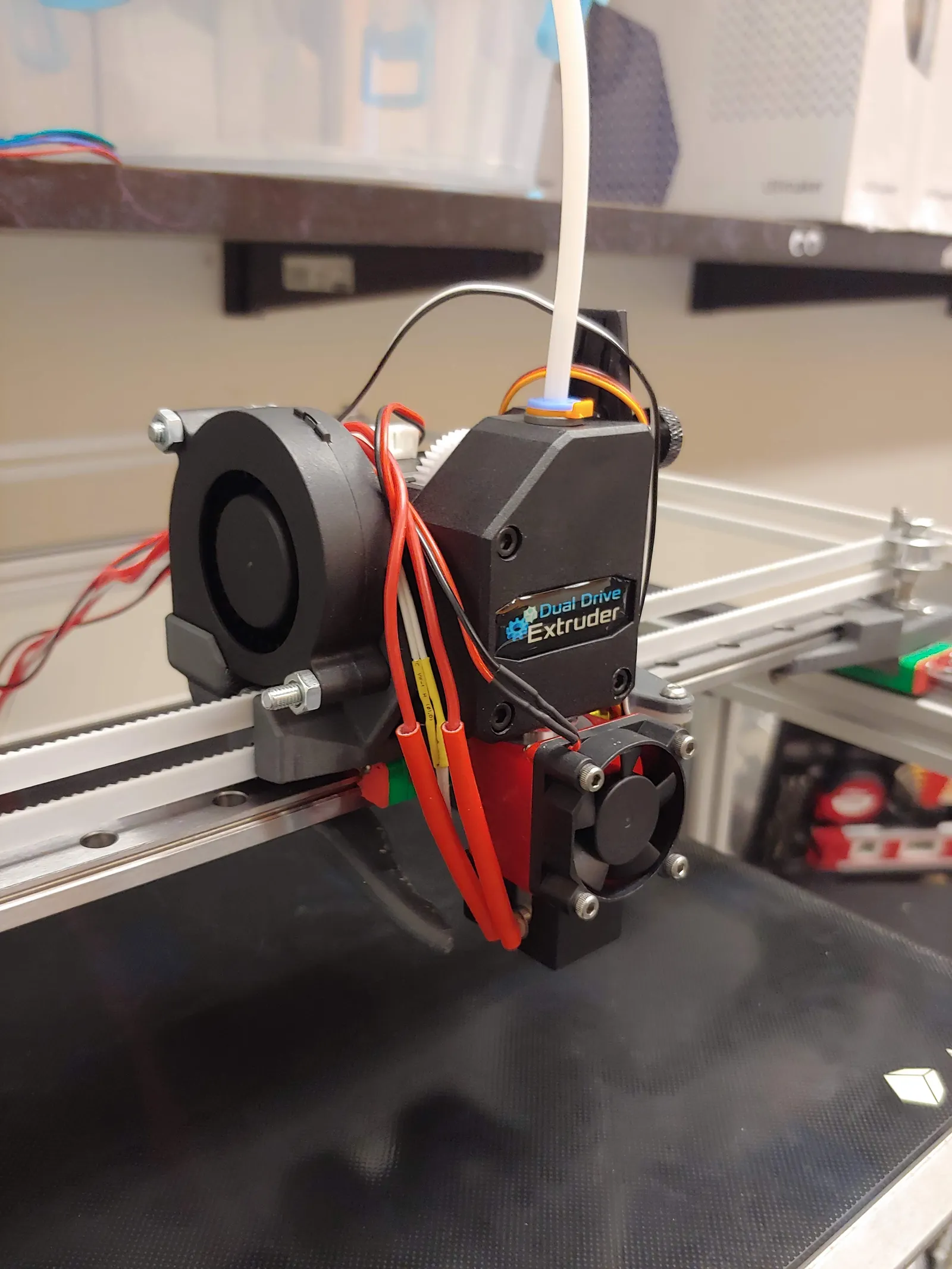
The completed print head assembly (pre-wiring), with the hotend, extruder, and part cooling duct
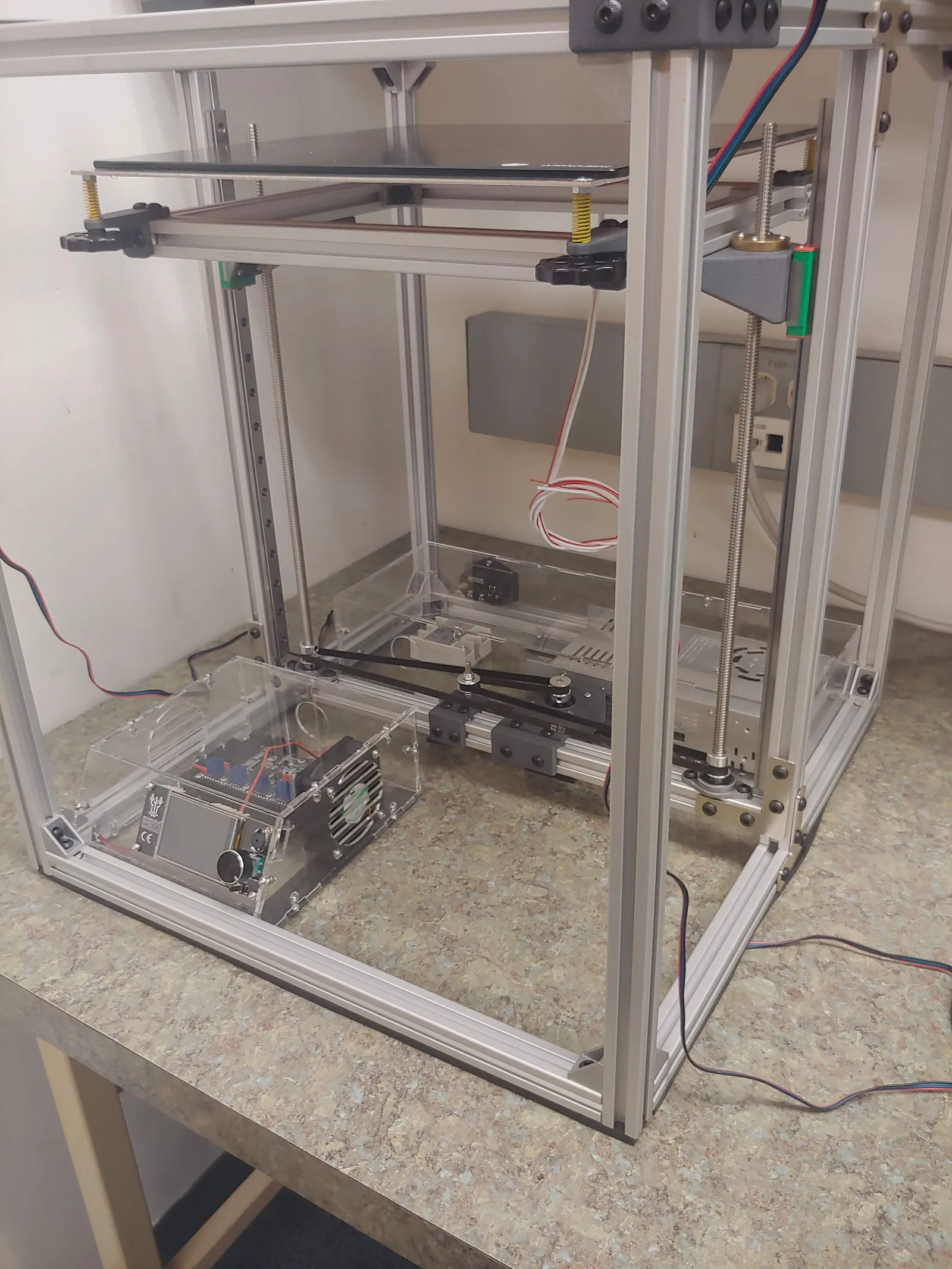
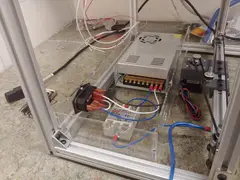
The electronics are mounted to laser-cut acrylic enclosures, and are separated into mains and non-mains boxes
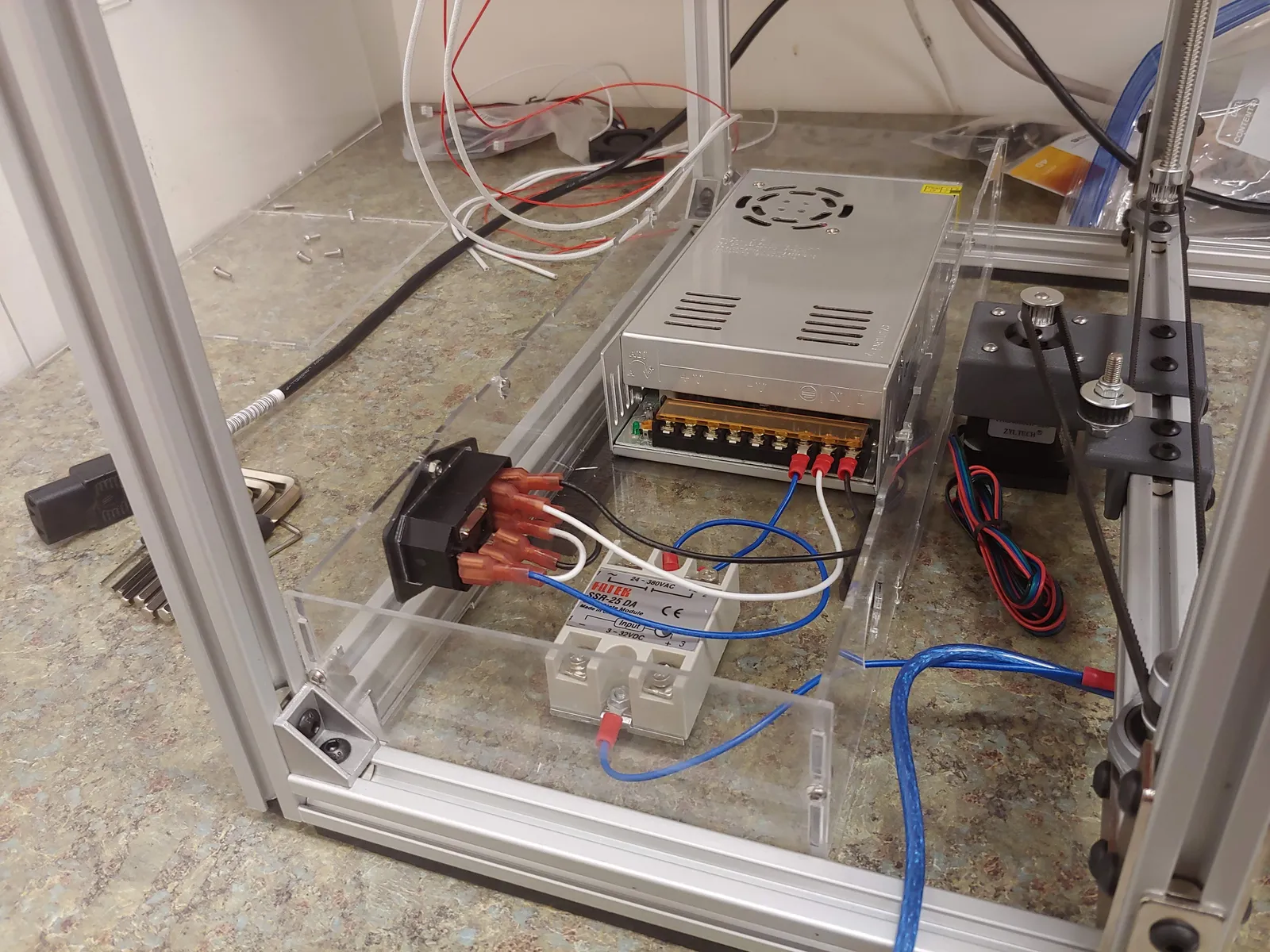
The rear electronics enclosure mounts the mains-voltage components, including the power input jack (with button and fuse), the 24V switching power supply, and the solid-state relay responsible for switching the AC-powered bed heater
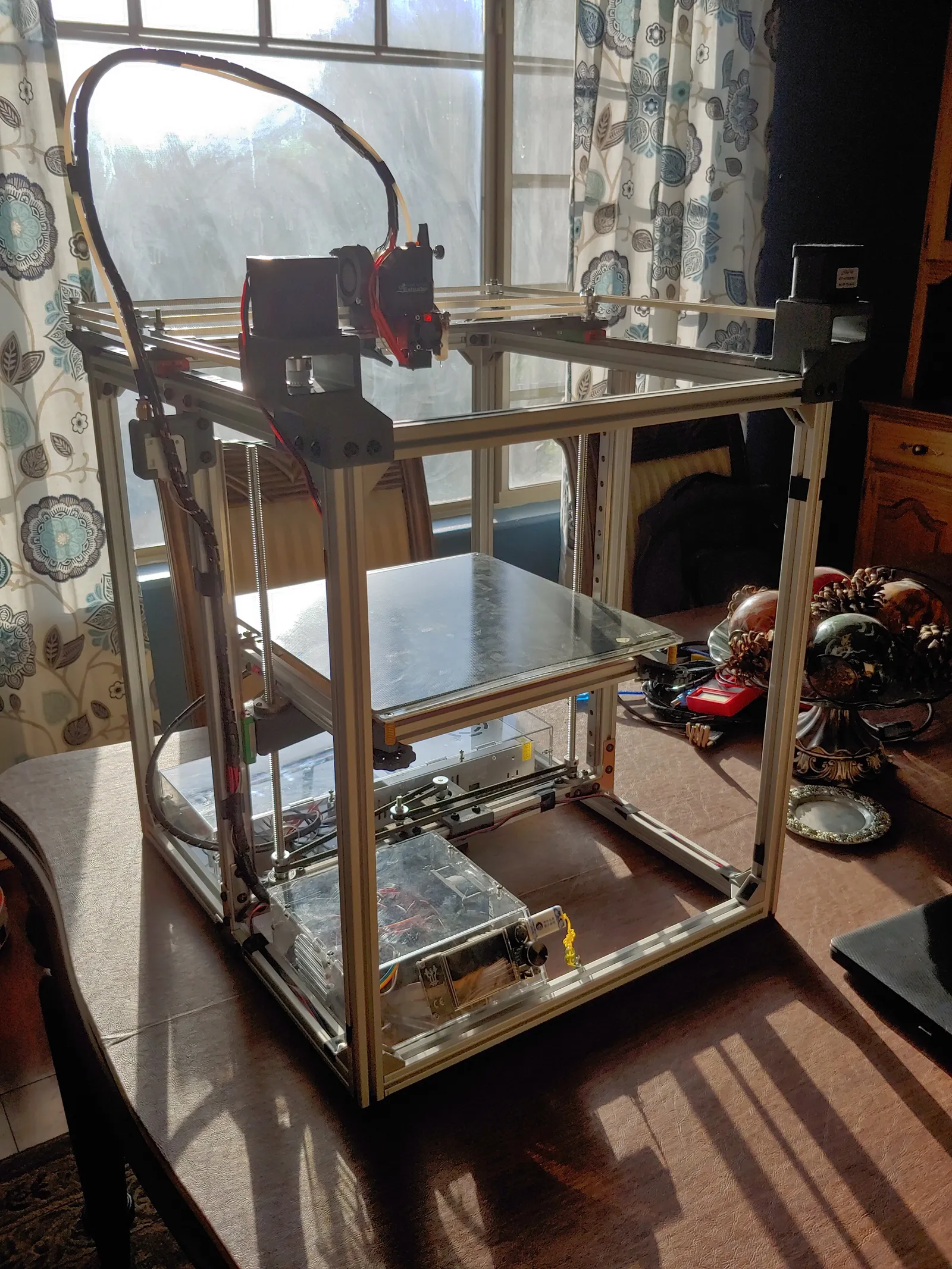
The completed 3D printer build
Background
In January of 2019, I started working at the Fulton 3D Print and Laser Cutter Lab at ASU, where I fell in love with 3D printing. I had free access to use the lab's printers, but our customers' print jobs always took priority over personal projects, and we were quite busy. I decided to buy my own printer, but after spending months researching the consumer market, I couldn't find any options that fit both my desired features and my limited budget.
During my search, I came across a custom build by Australian Youtuber Tech2C called the Hypercube. This machine boasted great performance and features for its cost. Inspired, I began to design my own 3d printer. After applying some vendor coupons, I got the cost down to ~$600. By June 2020, I had finished most of the calibration and the printer was fully up and running. The quality and speed of the resulting prints vastly out-performed the $2k Makerbot Replicator+ machines that we were using in the ASU print lab, and it competed with our Ultimaker S5 and Prusa machines as well. This machine became my primary project manufacturing tool over the next 4 years, producing parts for my other projects such as my combat robots, capstone, MS applied project, and more.
Key Design Decisions
| Feature | Decision | Rationale |
|---|---|---|
| Extruder Type | Direct Drive | Much better filament control, especially on flexible materials. Relatively high moving mass is compensated for with stiff linear rails |
| XY Kinematics | coreXY | This parallel mechanism is more complex than some alternatives, but it minimizes the moving mass, and allow the X and Y motors to work together on a majority of the movements |
| Linear Motion Components | Linear Rails | High cost compared to cylindrical linear bearings on rods, but each one constrains more DOFs, making the design and assembly easier. Still within budget |