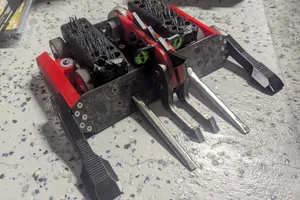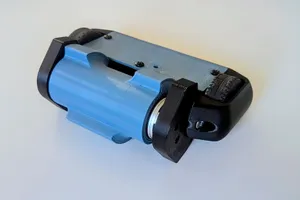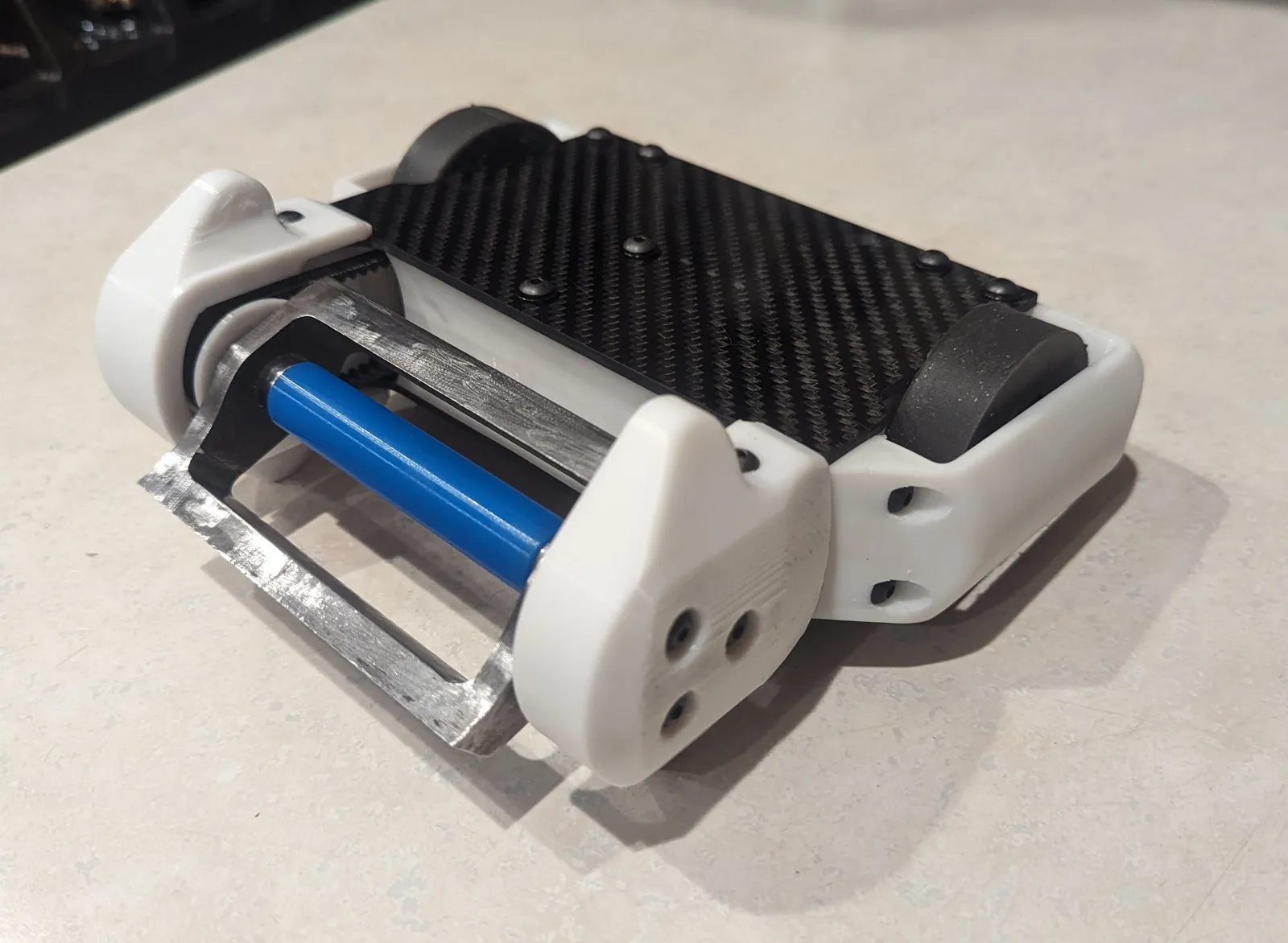
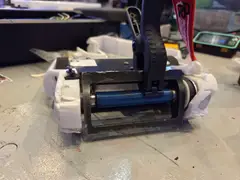
Latest iteration of spinny boiii, with a custom CNC-machined weapon and bulky TPU armor
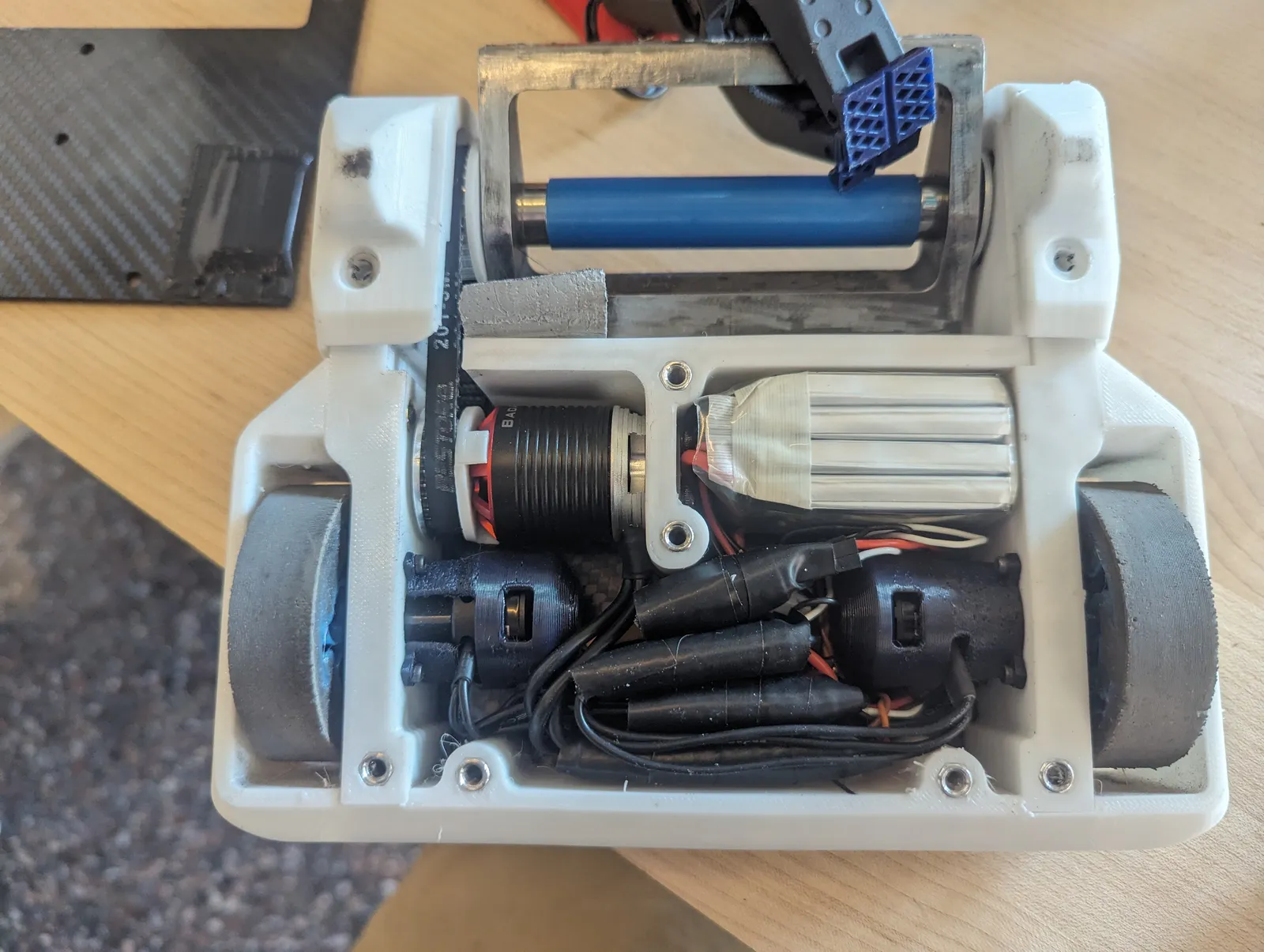
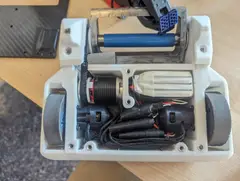
Internal electronics layout with motors, motor controllers, RC receiver, battery, and power distribution, with foam-wrapping around each board
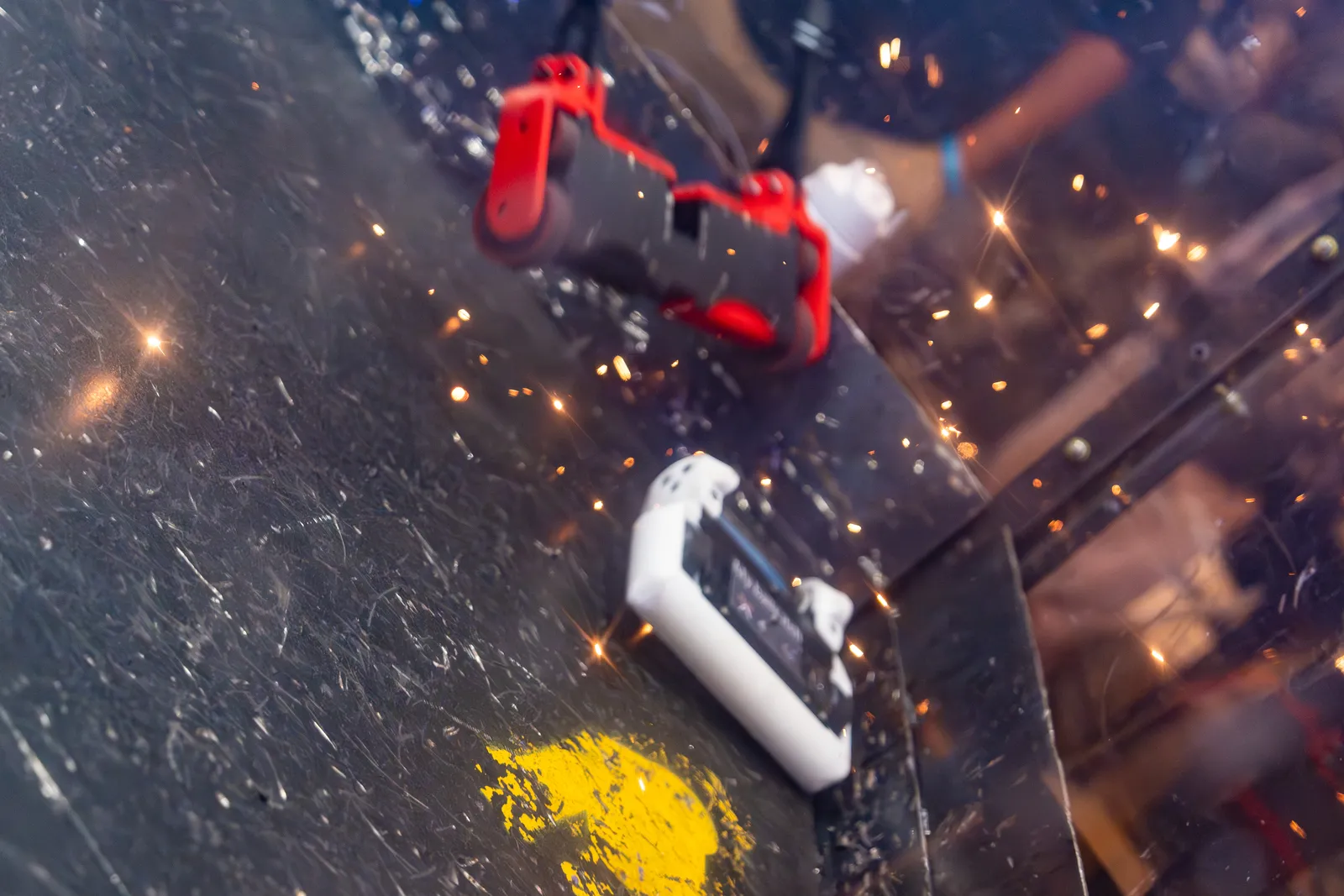
Winning the face-to-face engagement with a shower of sparks!
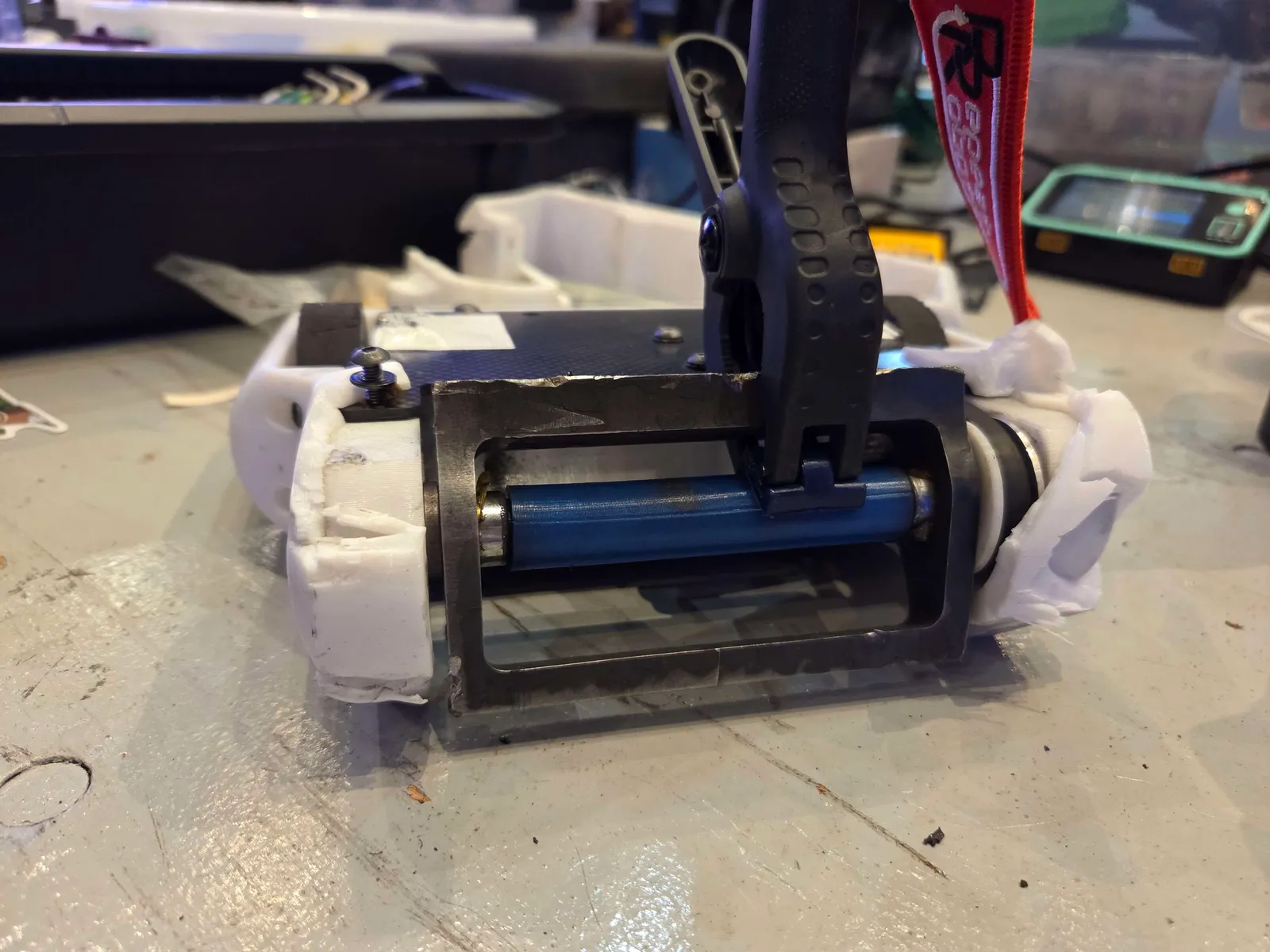
Took some heavy damage but still eeked out the win
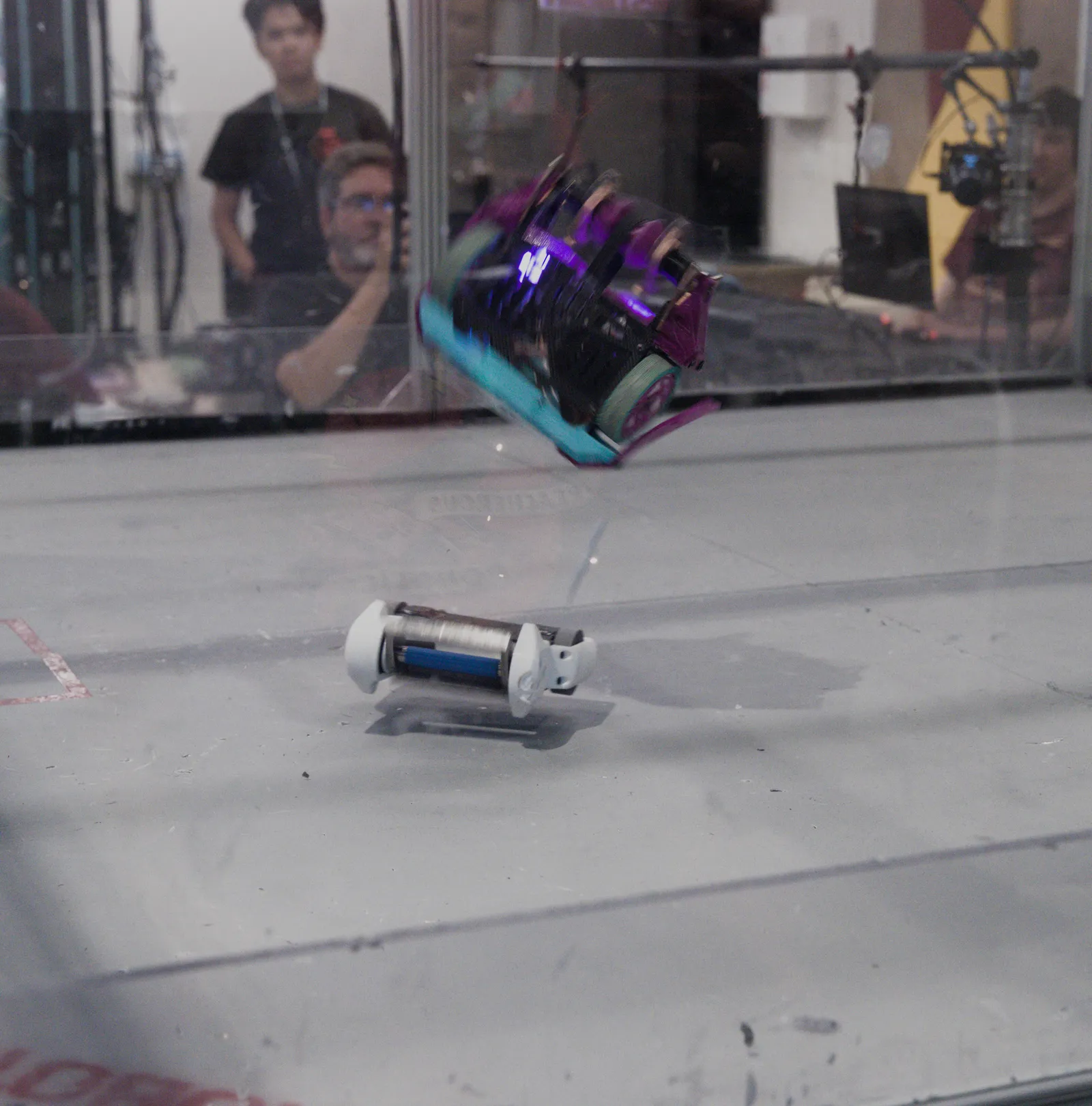
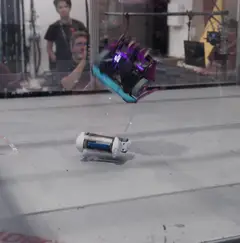
Powerful hit launches opponent "Action Surge" airborne at ARC Roborumble 2024
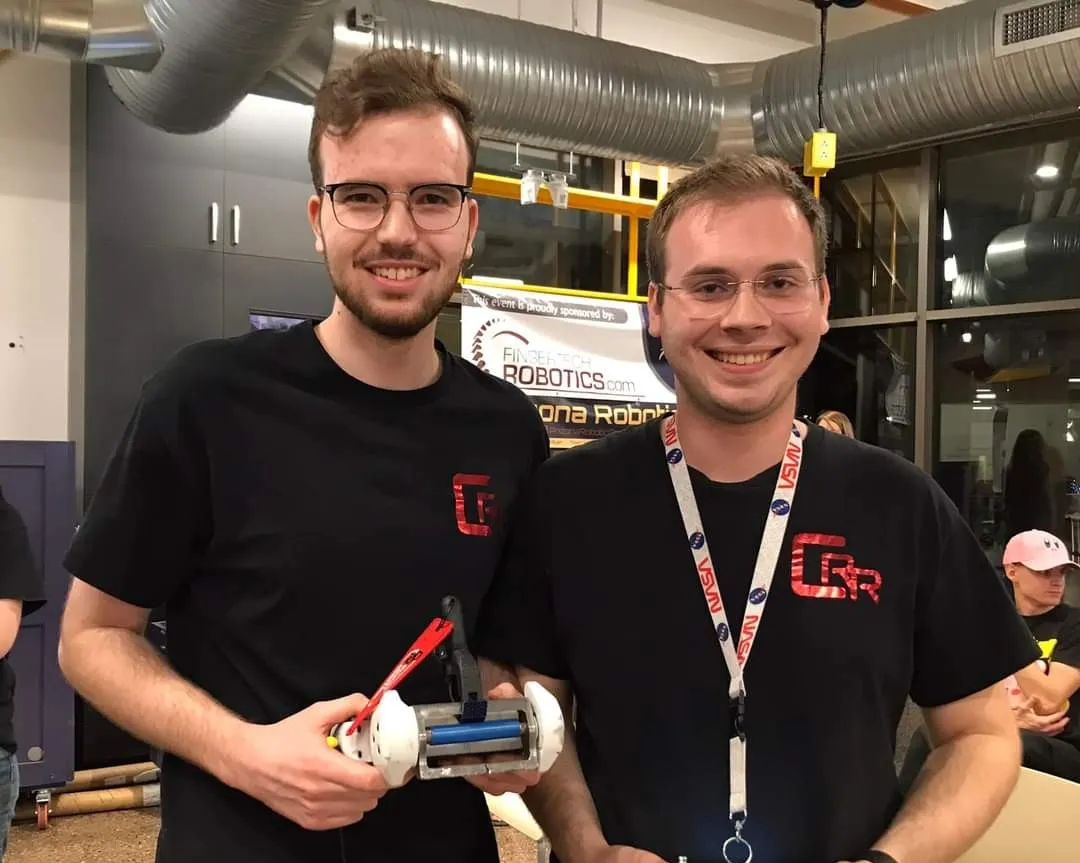
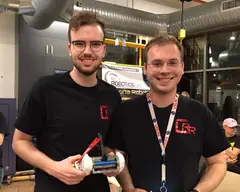
Benji Miller (left) and myself (right) at ARC: Roborumble 2024
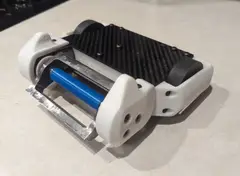
spinny boiii - 3lb Combat Robot
A competitive beetleweight combat robot with an egg-beater drum weapon and a powerful magnet-assisted drive system
Quick Facts
“spinny boiii” is my first competitive beetleweight (3-pound) combat robot. I started building this robot in 2020 with my teammate, Benji Miller, while I was creating ASU’s student combat robotics program. The design we settled on is a compact 2-wheel-drive (2WD) chassis with a wide beater bar drum spanning the front of the bot. It evolved dramatically from its initial design, and became one of the highest-performing beetleweights in Arizona. We’re quite happy with the capabilities of version 3.0, and are taking a break from competing with it while we plan next steps. Version 4.0 will focus on reducing the weapon failure rate (currently once every 6-ish fights) and whittling away a few edge-case failures that we’ve encountered. Read more about each version of the robot below.
Design Iterations
Version 3 - spinny boiii gets competitive
Major redesign with an overhauled weapon system and updated materials
Quick Facts
Loading 3D viewer...
spinny boiii version 3.0 with its CNC-machined S7 tool steel beater bar weapon and thick TPU armor
Version 3 of spinny boiii (yes, we add an extra “i” for each major version) proved to be a major step forward in both performance and reliability. The previous version was reasonably durable against vertical spinners, but if it was hit hard by a horizontal spinner, the front side armor and weapon mounts would fail, often resulting in a fully ejected weapon. The biggest change in V3 was the addition of a dead shaft mounted to thick TPU side rails, preventing them from being pulled apart. The metal front side armor was replaced with thick TPU guards, which can have chunks torn free but don’t deform plastically. These guards take a lot of damage, but they are easy to replace and cheap to make.
This version also benefited from a lot of custom CNC-machined parts that I machined at work. These include a S7 tool steel beater bar weapon (which I hardened to 54HRC in my heat treat oven at home), aluminum timing pulleys, and a weapon motor mounting insert that doubles as a small heatsink. Since upgrading to machined pullies, we have yet to break a timing belt, even after 22 fights, and there is effectively zero pulley wear.
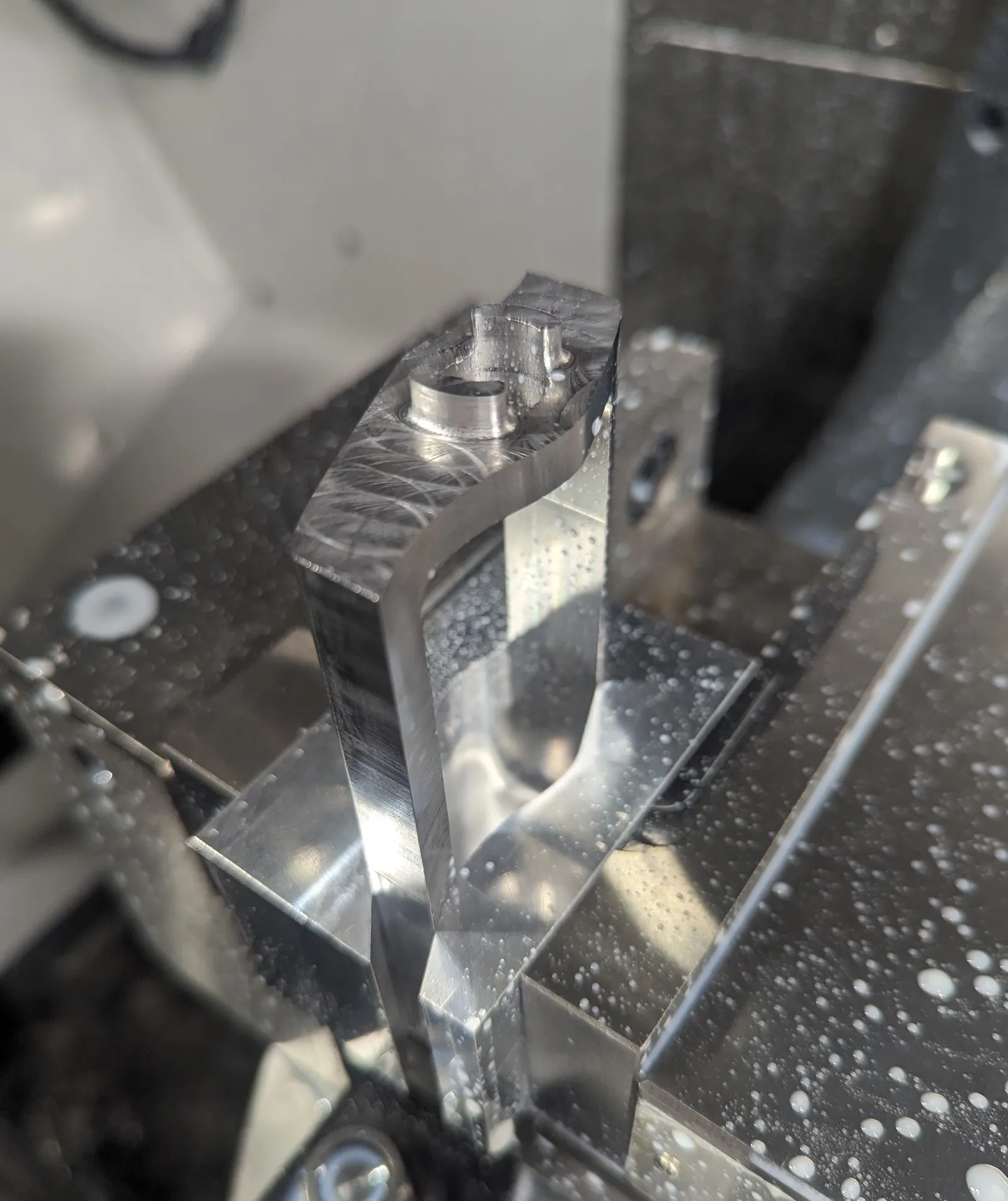
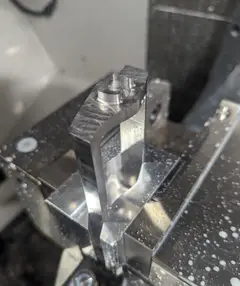
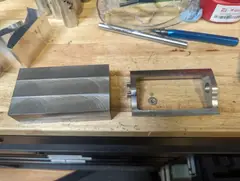
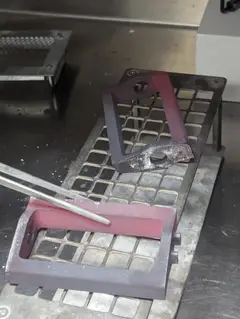
Just-machined drum, clamped in the mill's vise with soft jaws
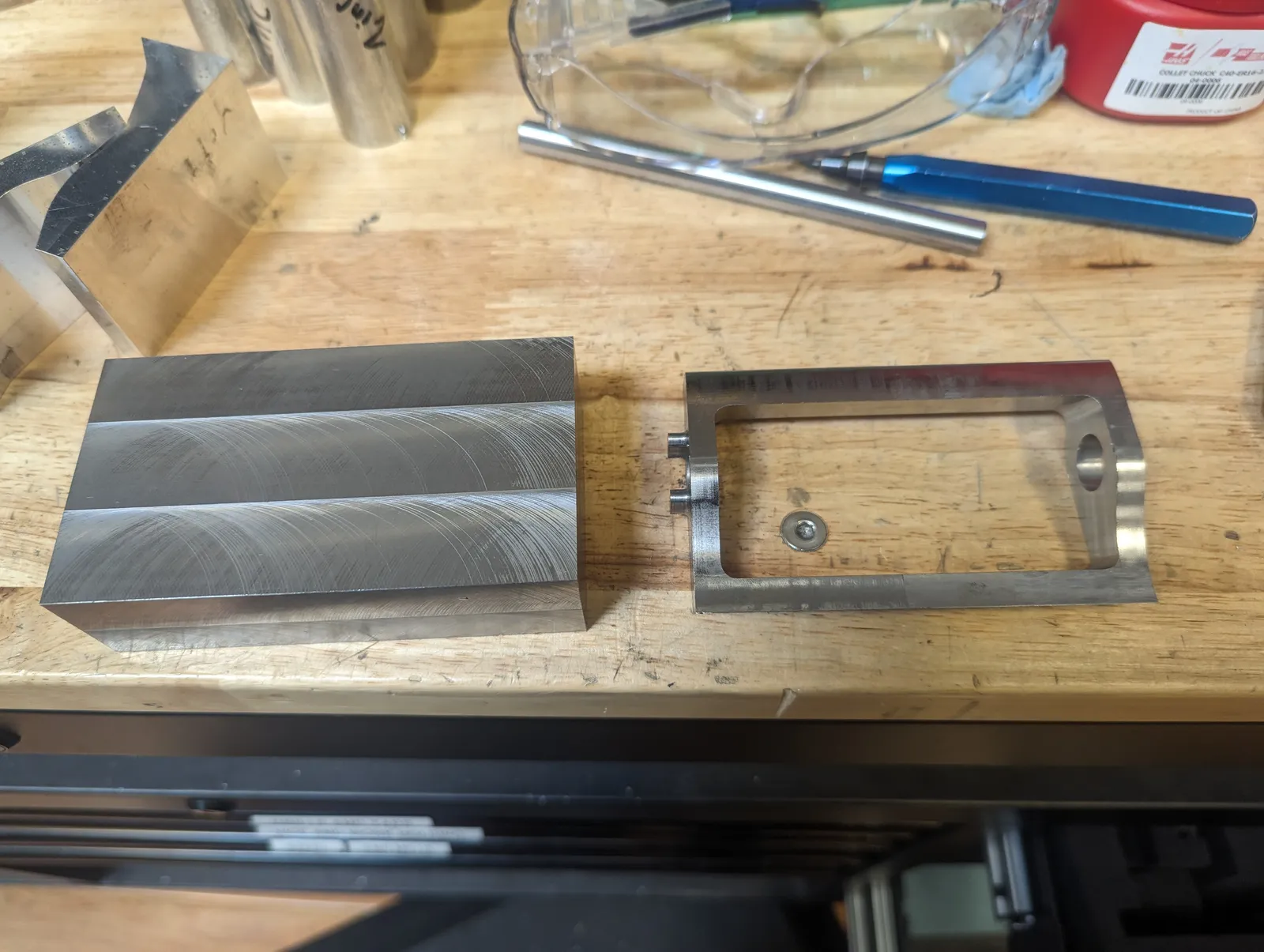
The beater bar (right) was machined from a $10 offcut of S7 tool steel (left)
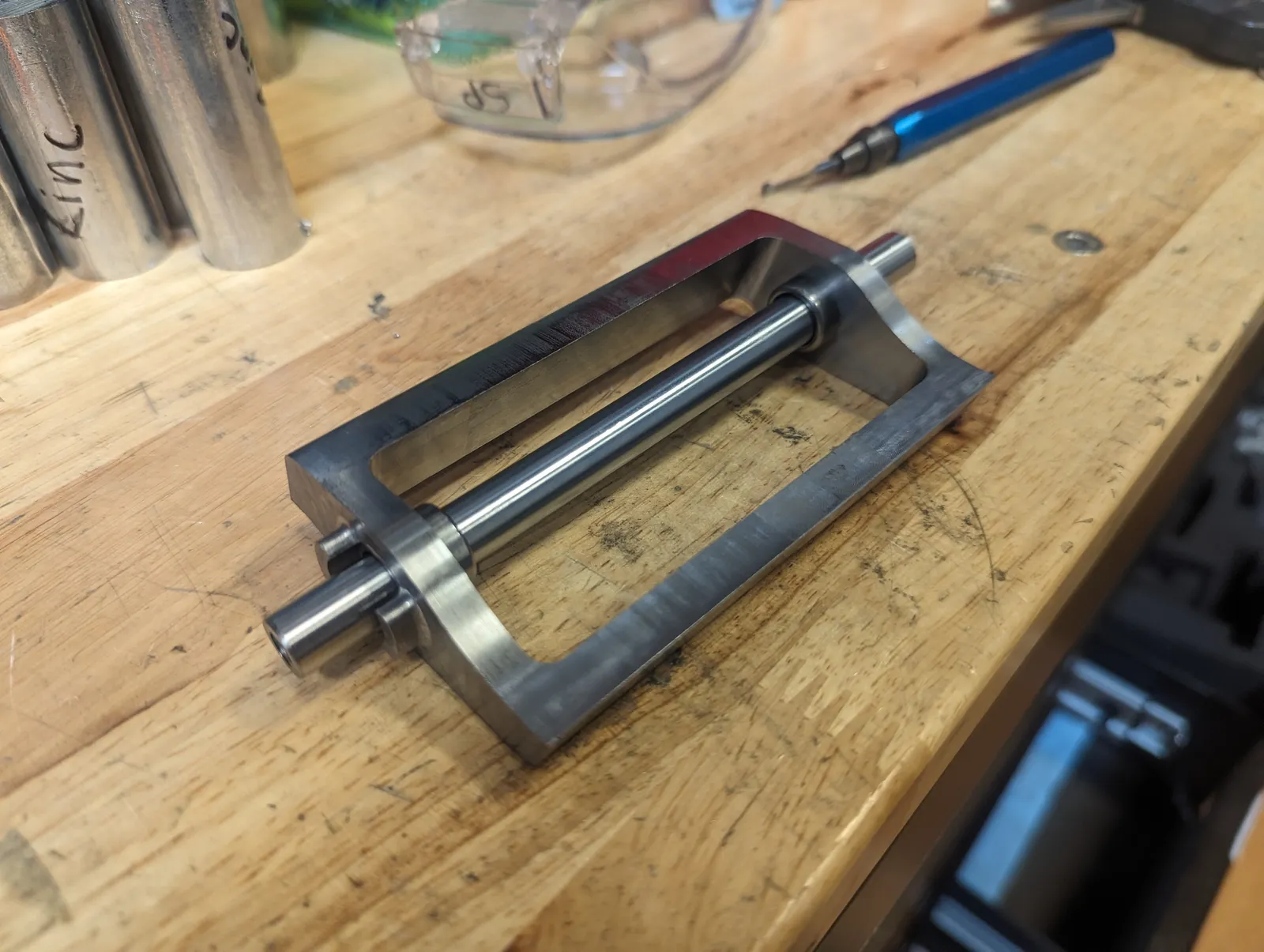
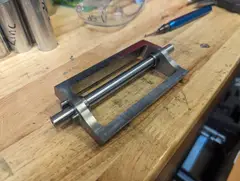
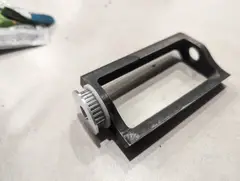
Finished drum with its needle bearings and dead shaft
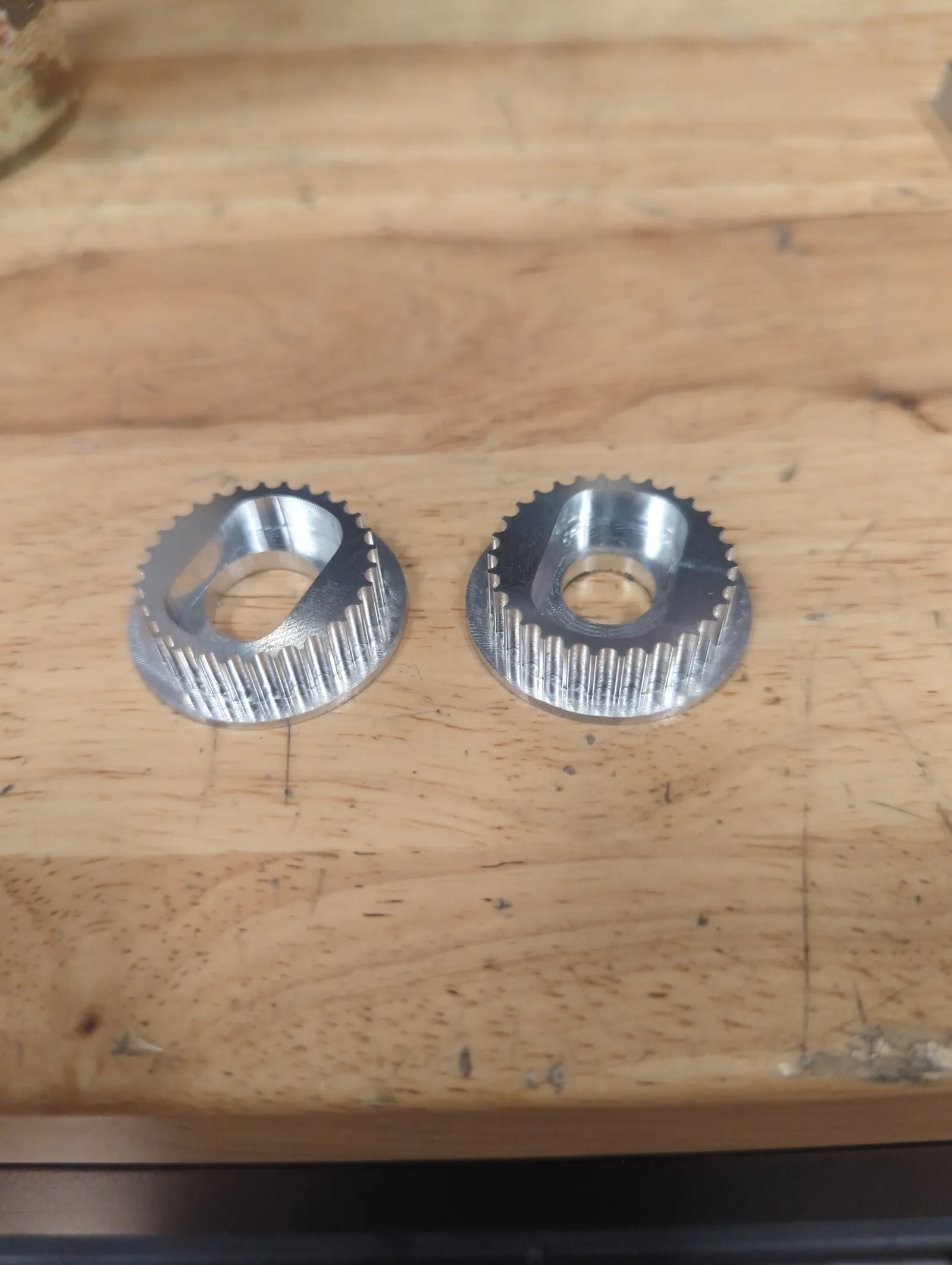
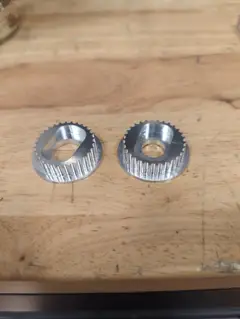
CNC machined aluminum timing pulleys
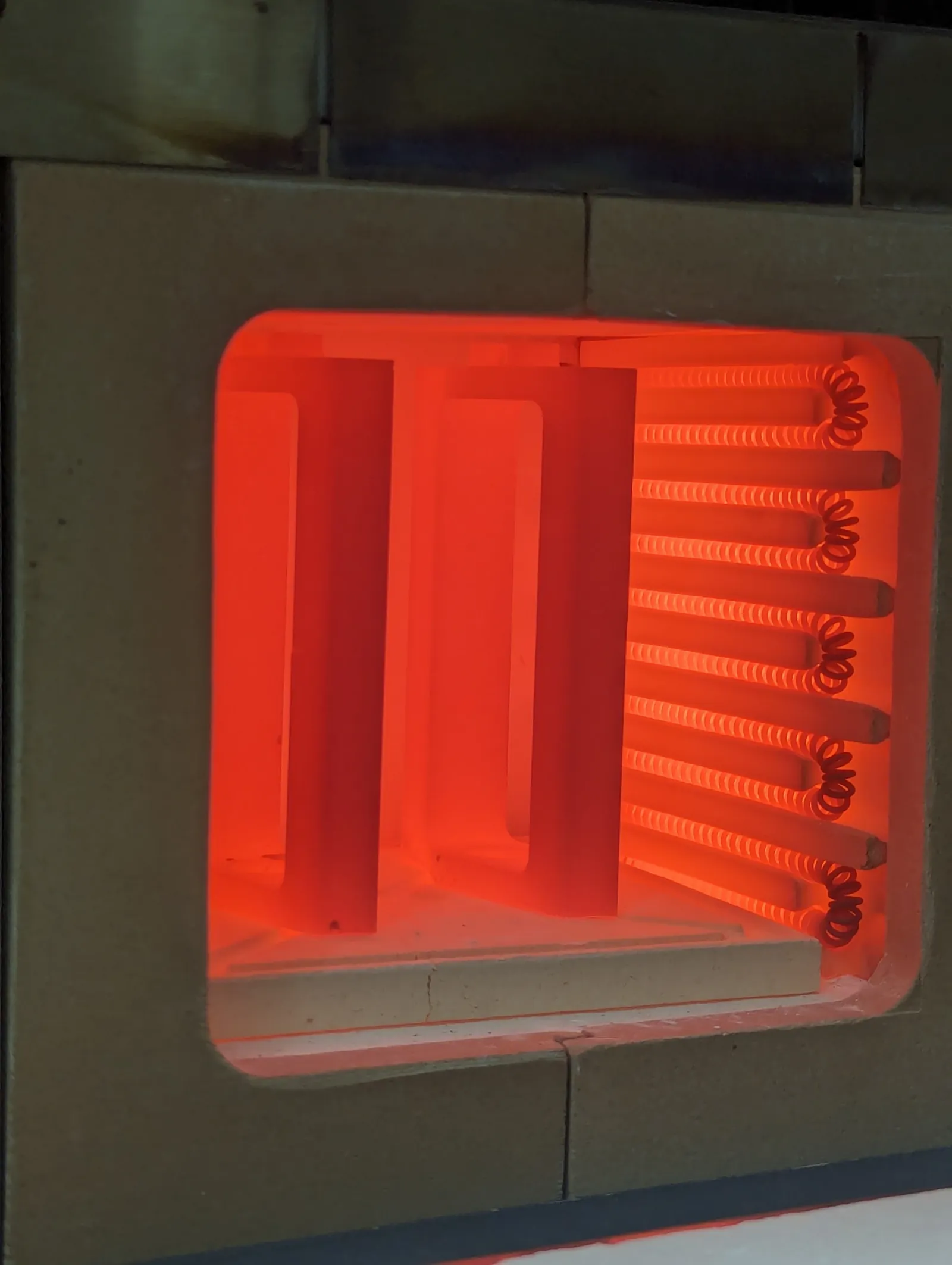
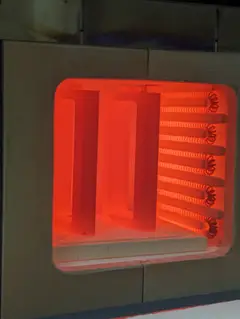
Two drums in the heat treat oven
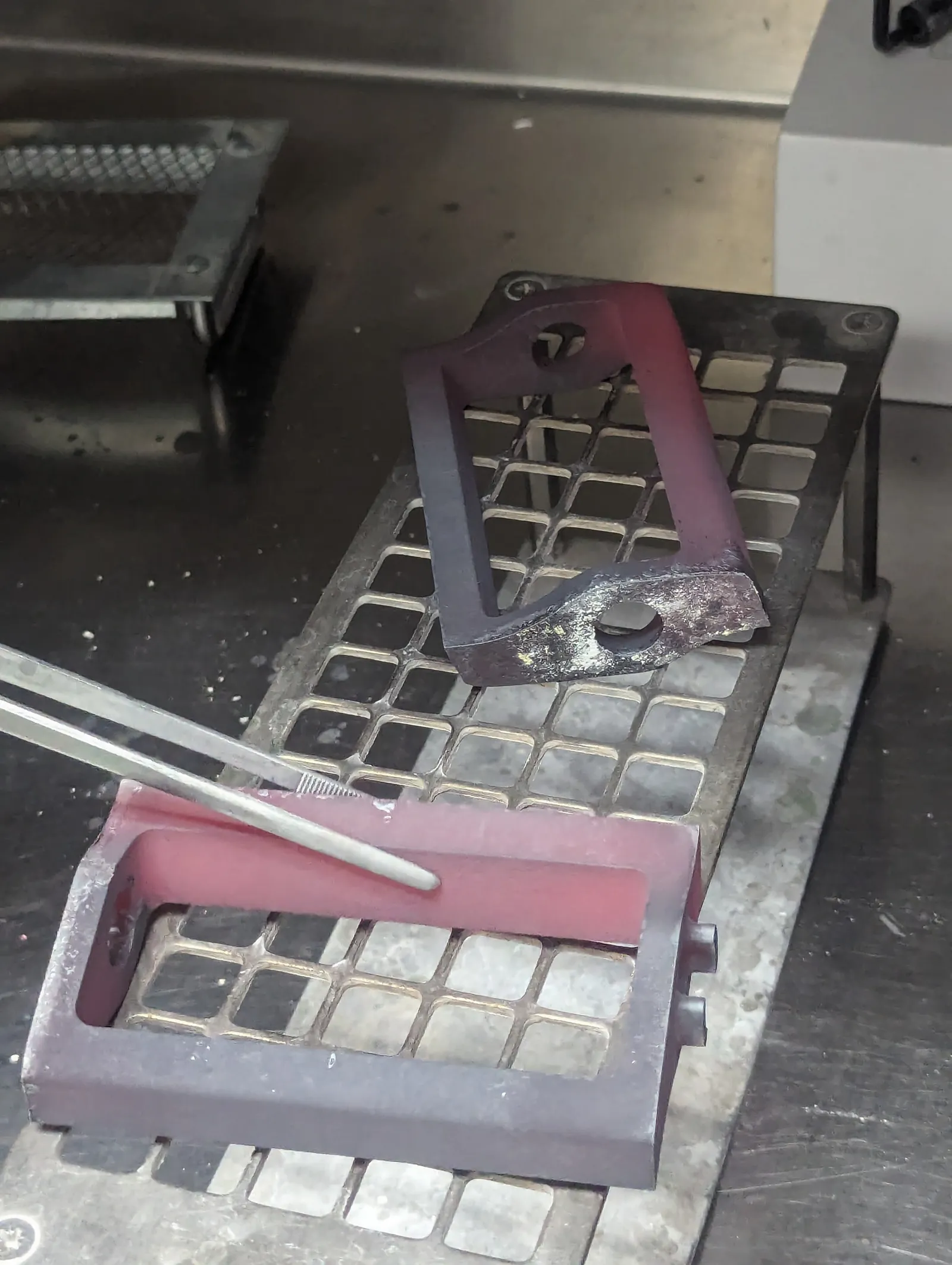
Drums air-quenching after the initial treatment
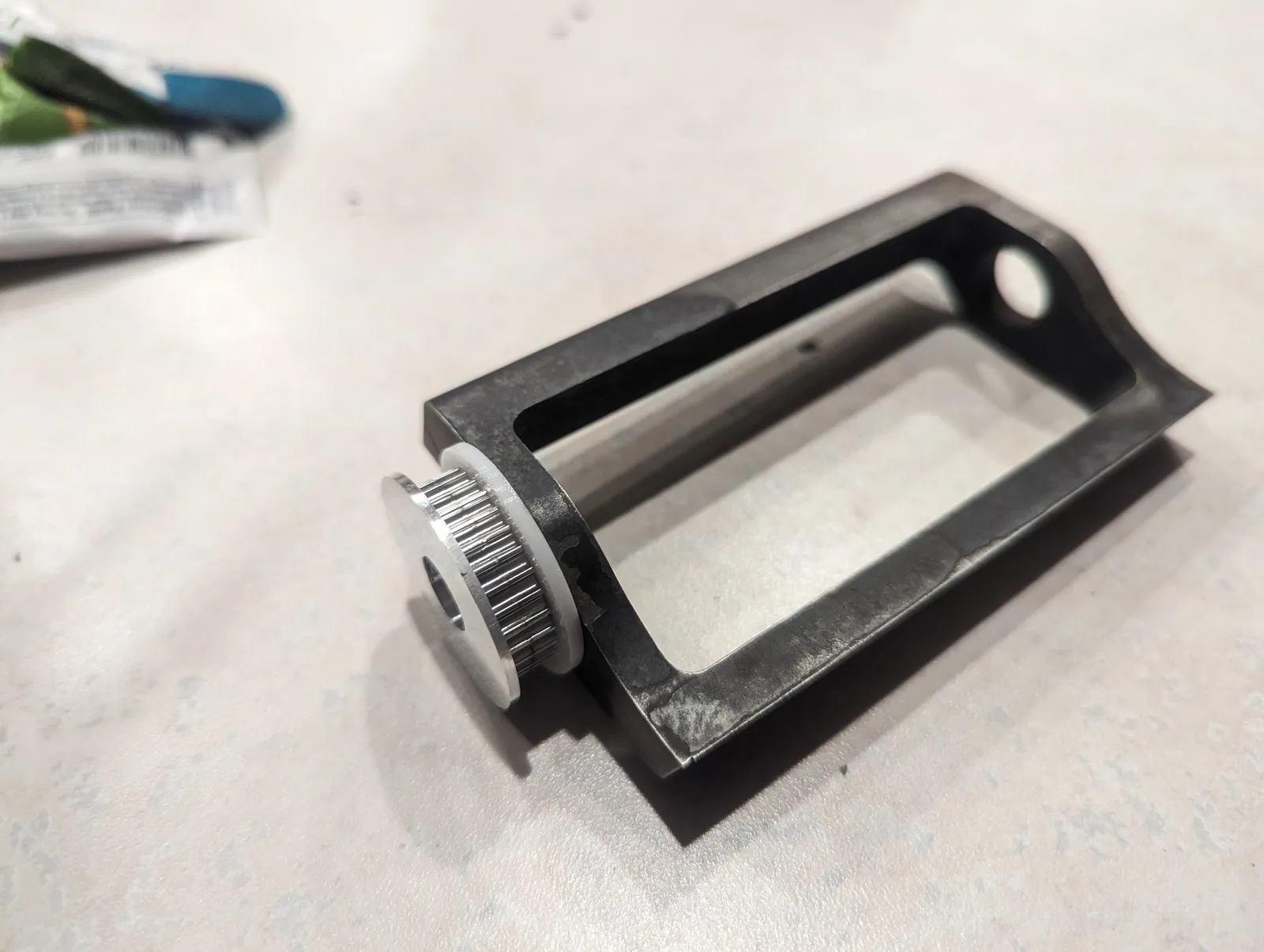
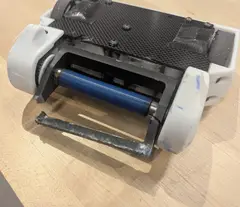
A heat-treated drum with its pulley. The white TPU insert helps reduce shock transfer to the weapon motor
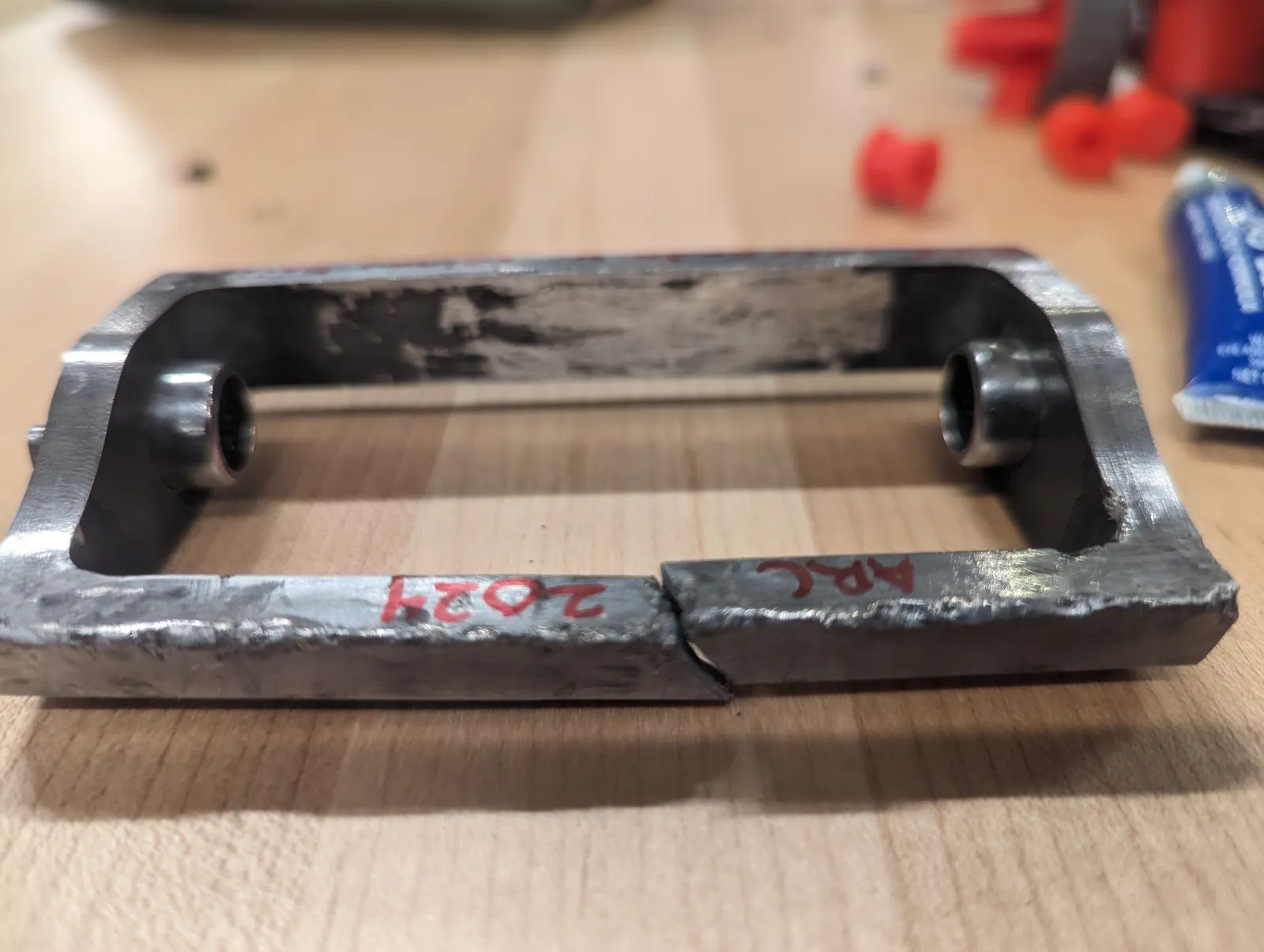
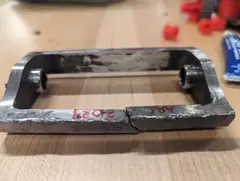
One of the beater bars broke during its 5th fight, but it kept spinning and we won! Future versions will improve the drum durability
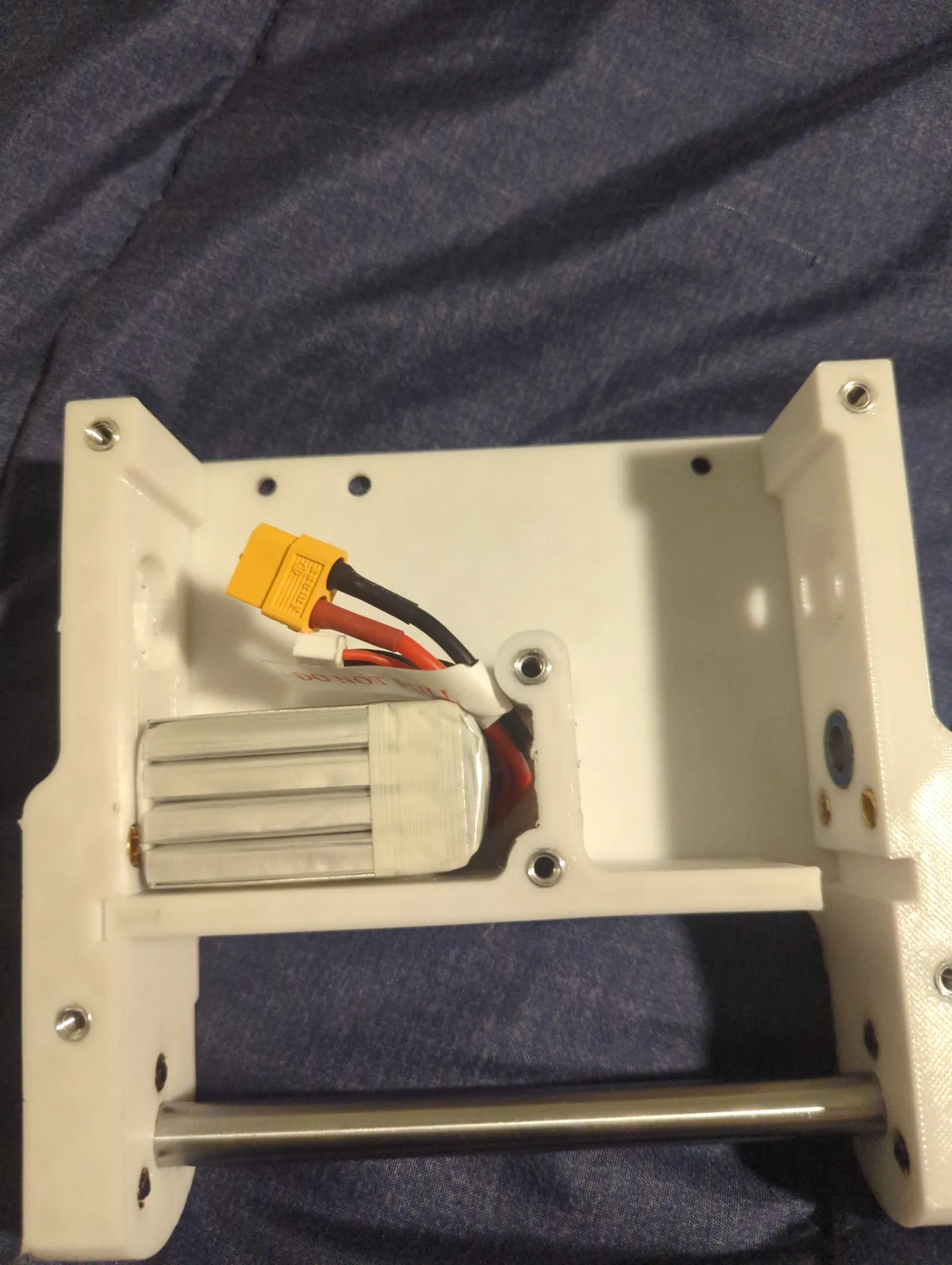
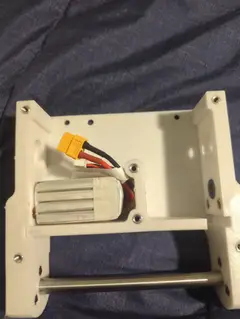
Test-fitting the side plates, weapon shaft, bottom plate, and battery
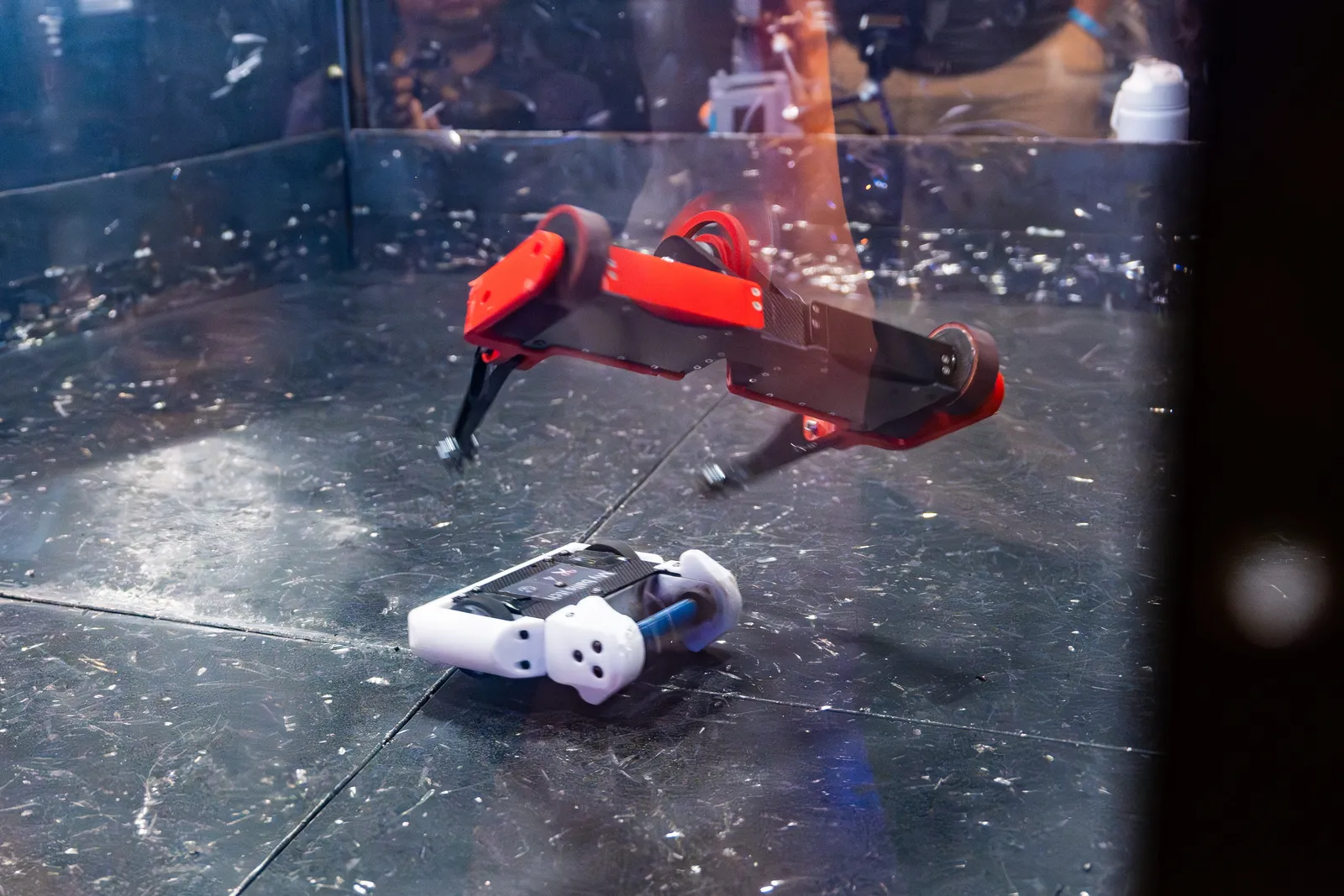
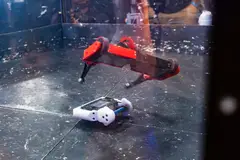
Version 3 pops Z3phyr up into the air at RCL Nationals 2025
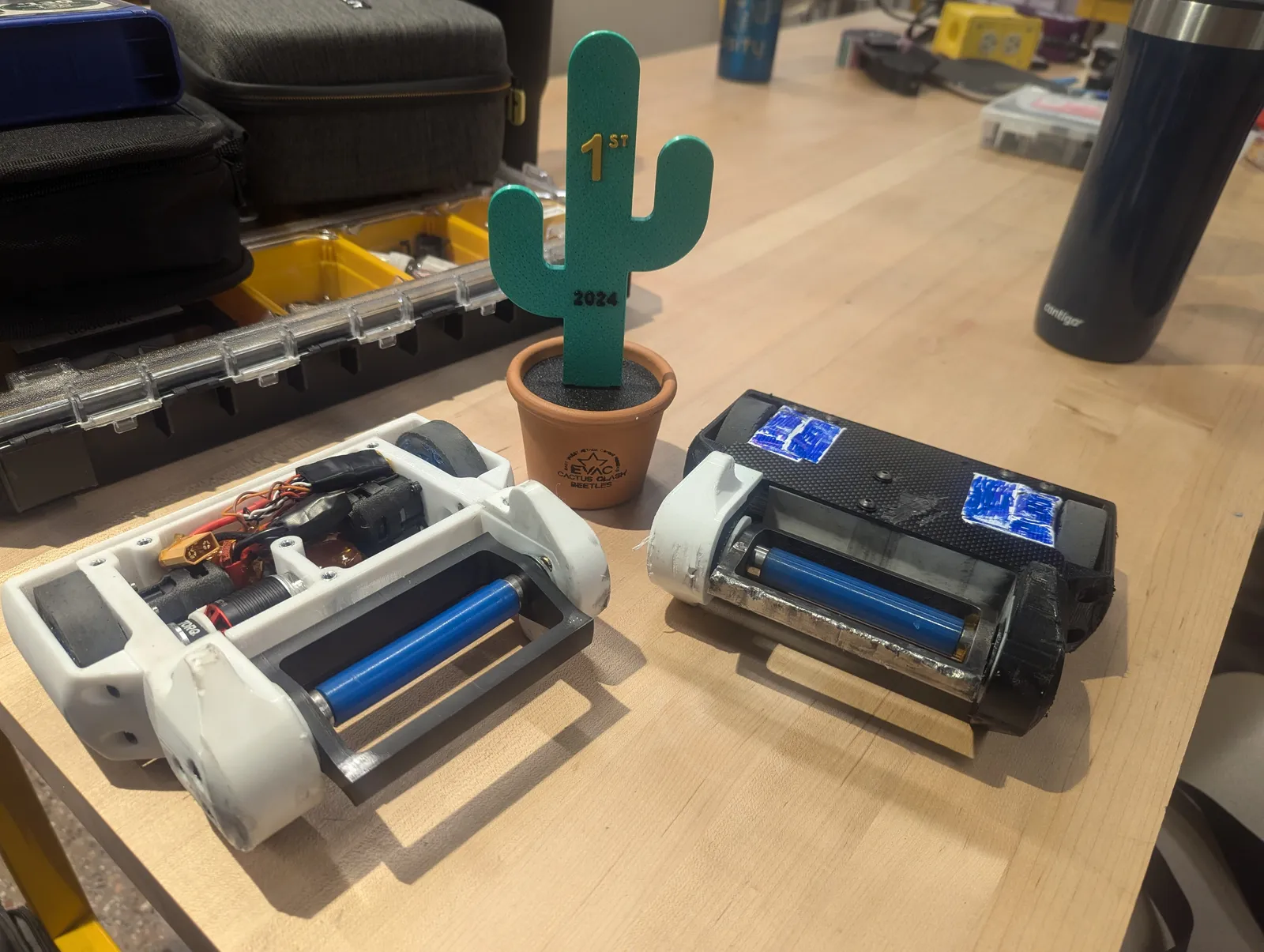
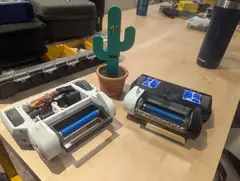
2 copies of spinny boiii, after winning 1st place at EVAC Cactus Clash 2024
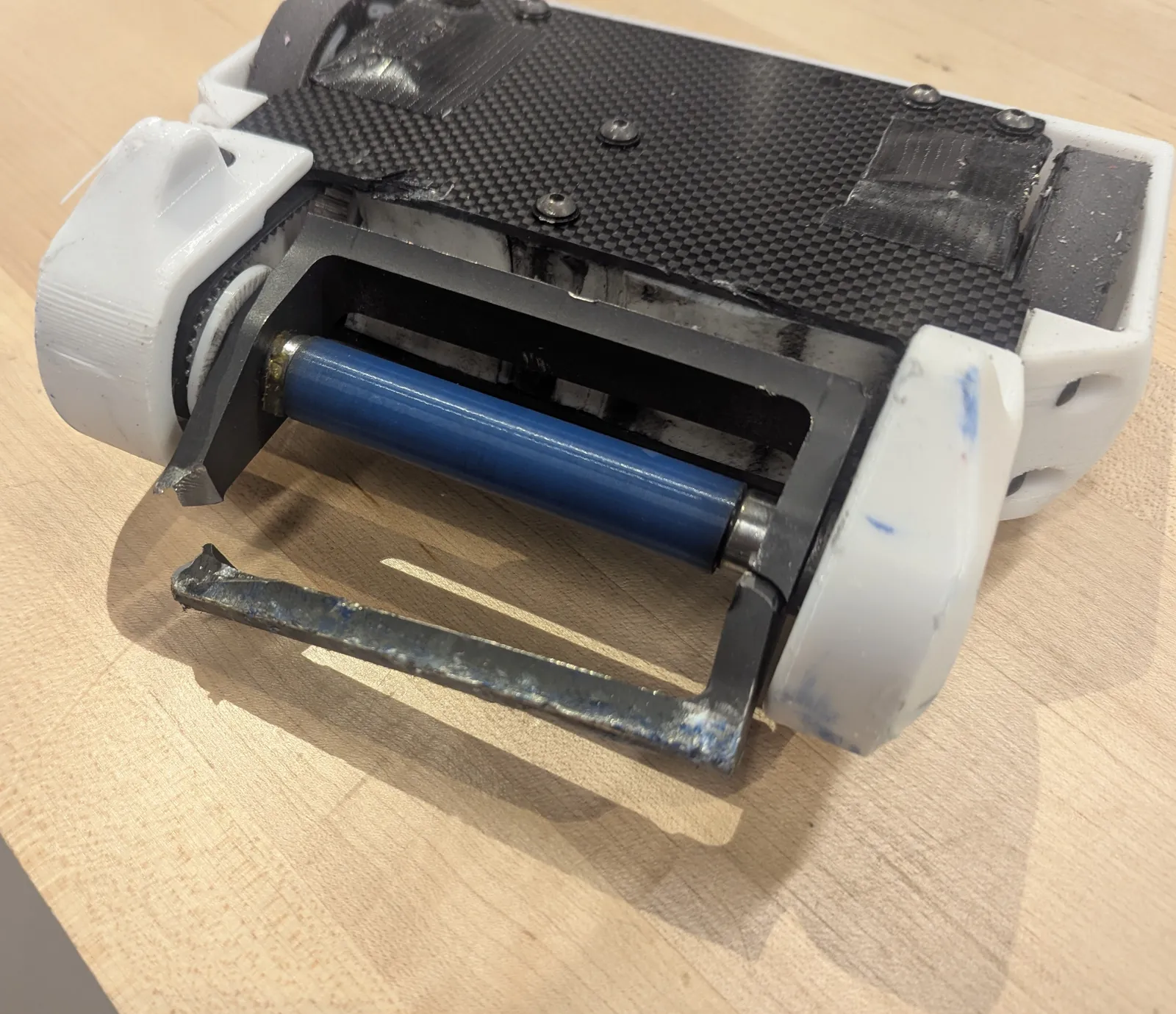
Our 4th and final self-machined drum broke in a grudge fight against Jimbo at EVAC Monster Mash 2025. We won the fight after Jimbo's electronics failed, but we can't fight again until we come up with a new design that is more sustainable.
Major Improvements
Weapon System:
- New CNC-machined S7 tool steel drum (asymmetric beater bar design)
- Hardened dead shaft mounts to thick TPU side rails, preventing them from pulling apart during side impacts
- Custom CNC aluminum timing pulleys, with TPU mounting insert to reduce shock transfer to the weapon motor
- No screw holes in the drum to prevent stress risers and cracking (pullies mount with driving dogs instead)
Drive System:
- Repeat Pro 2006 motors, for more power and tougher gearboxes / shafts
- High-quality magnets from K&J Magnetics, for better traction
- Clamping wheel hubs with D profile to prevent slippage
Frame and Armor:
- T700 carbon fiber top and bottom plates, joined with aluminum standoffs
- Thick TPU side rails help reduce shock transfer to the motors
- Bulky TPU front guards are strong enough for 1-3 matches, don't fail catastrophically, and are easy to replace
Electronics:
- Upgraded to BA2320-1860kv for higher tip speed
- Upgraded to ELRS receiver for better signal reliability
- Silicone foam wrapping for better shock absorption
- Conformal coating of electronic potting compound to protect against impact and debris
Issues
- The weapon drum is prone to cracking after an average of 6 fights
- Narrow margin for battery capacity when pushing the weapon speed high to face other drum spinners effectively (faster tip speed wins)
- The TPU front armor takes damage very quickly against horizontal spinners, and if the ground-riding nubbins get torn off, the weapon can hit the ground repeatedly
- The robot's shape is not very compatible with modular front attachments like forks and wedges. This means we have a hard time dealing with control-centric robots with long forks
- Due to the rear-set wheels and the flexible chassis, the robot sometimes ends up in a mild three-point stance, with one of the wheels making poor ground contact. On steel floors, this effect is completely eliminated by our magnets, and the bot drives great. But on wood floors, the robot is almost undriveable
The poor drive control on wood floors is mitigated somewhat using cleated wheels, but that adds a lot of stress to the drive gearboxes. The regular TPU wheels with cast rubber tread do a good job of isolating the motor shafts from impacts when the bot lands hard on its wheels, but the cleats remove much of that protection. This caused drive failures at Sonoran Showdown 2025, where we broke 4 Repeat Compact motors. This is part of the reason we switched to Repeat Pro’s. Even with cleated wheels, the bot is still difficult to drive on wood floors, so we might have to relegate spinny boiii to steel floors only in the future.
The drum cracking problem was feasible to work around when I had the means to machine the drums myself ($10 in steel and ~2 hours of machining time), but I no longer have access to that mill, and outsourcing the drums is prohibitively expensive (~$150 each). Given that our final drum broke while fighing Jimbo (see above), we have decided to pause development of spinny boiii until we can come up with a more sustainable weapon design while keeping the same overall bot style.
Fight Video Playlists

Version 2.1 - first taste of victory
Material overhaul with magnet-assisted drive and improved weapon support
Quick Facts
Summary
V2.1 was a refinement of the V2 design, with a focus on improving weapon durability and drive performance. The most important upgrades happened right before ARC: RoboRumble 2023, where spinny boii got its first taste of victory
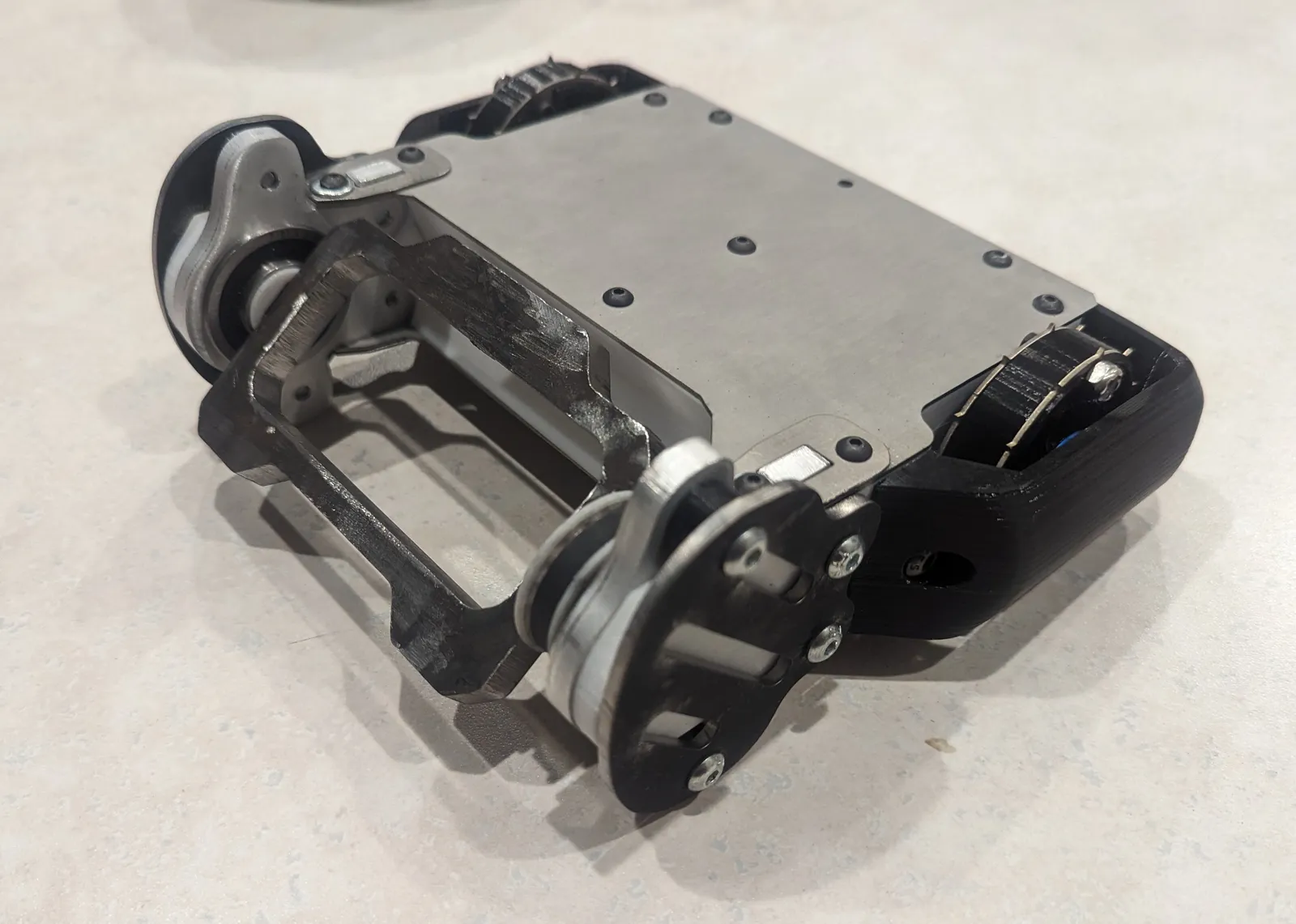
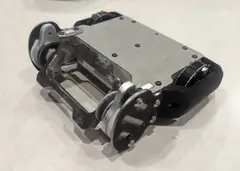
Version 2.1 with titanium top/bottom plates, TPU back/wheel armor, AR500 front side armor, and cleated wheels for better traction on wood floors
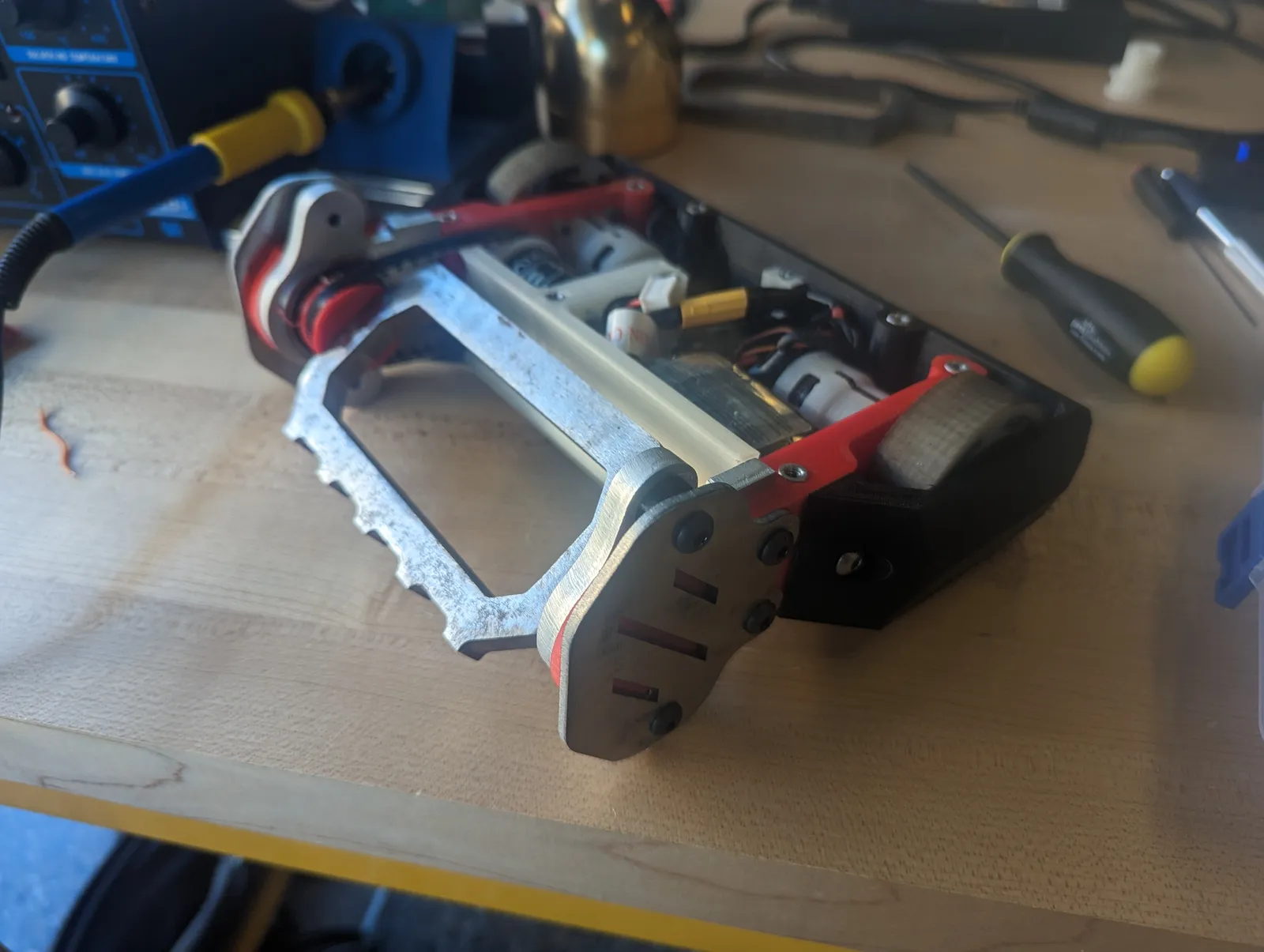
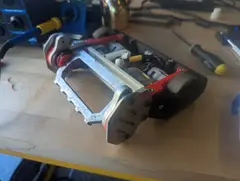
Version 2.1 with the titanium top plate removed, showing the internal components
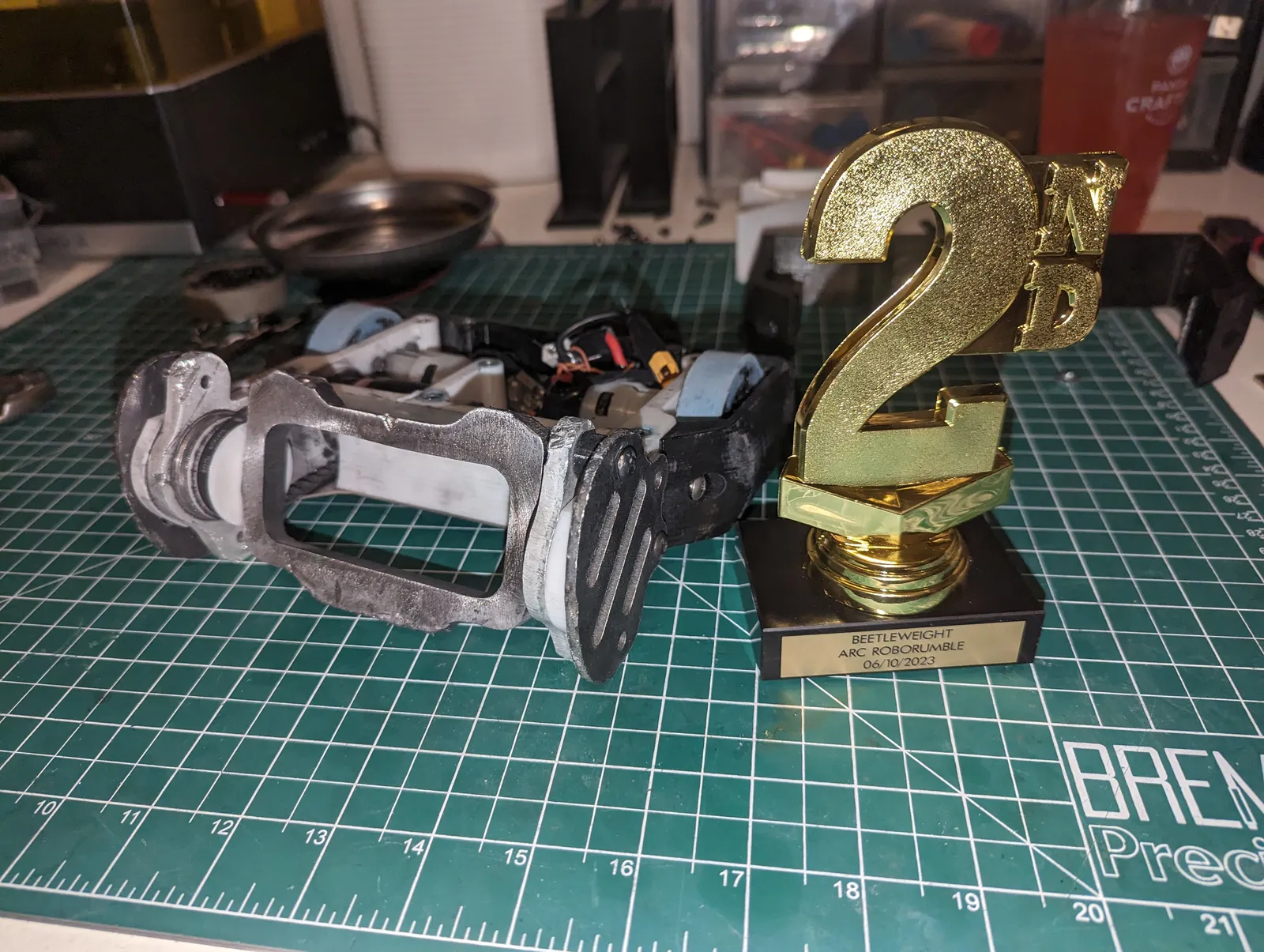
spinny boii finally got a taste of victory at ARC: RoboRumble 2023, taking 2nd place and beating the previous year's champion
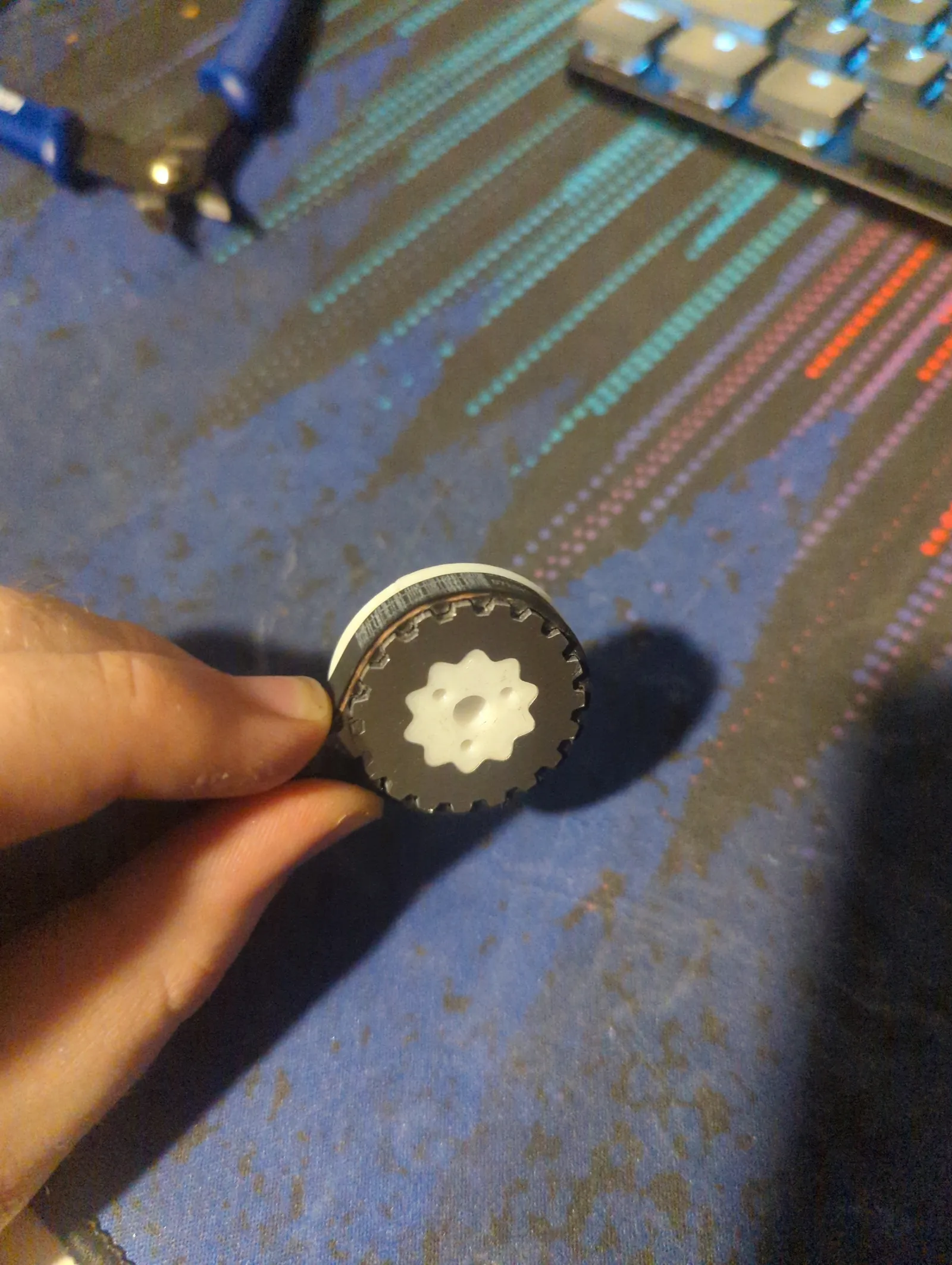
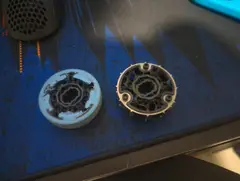
A custom TPU pulley with aluminum teeth made from a stack of laster-cut plates. This solution was much more robust than fully printed pullies, but not as good as the fully CNC version that would replace it in v3
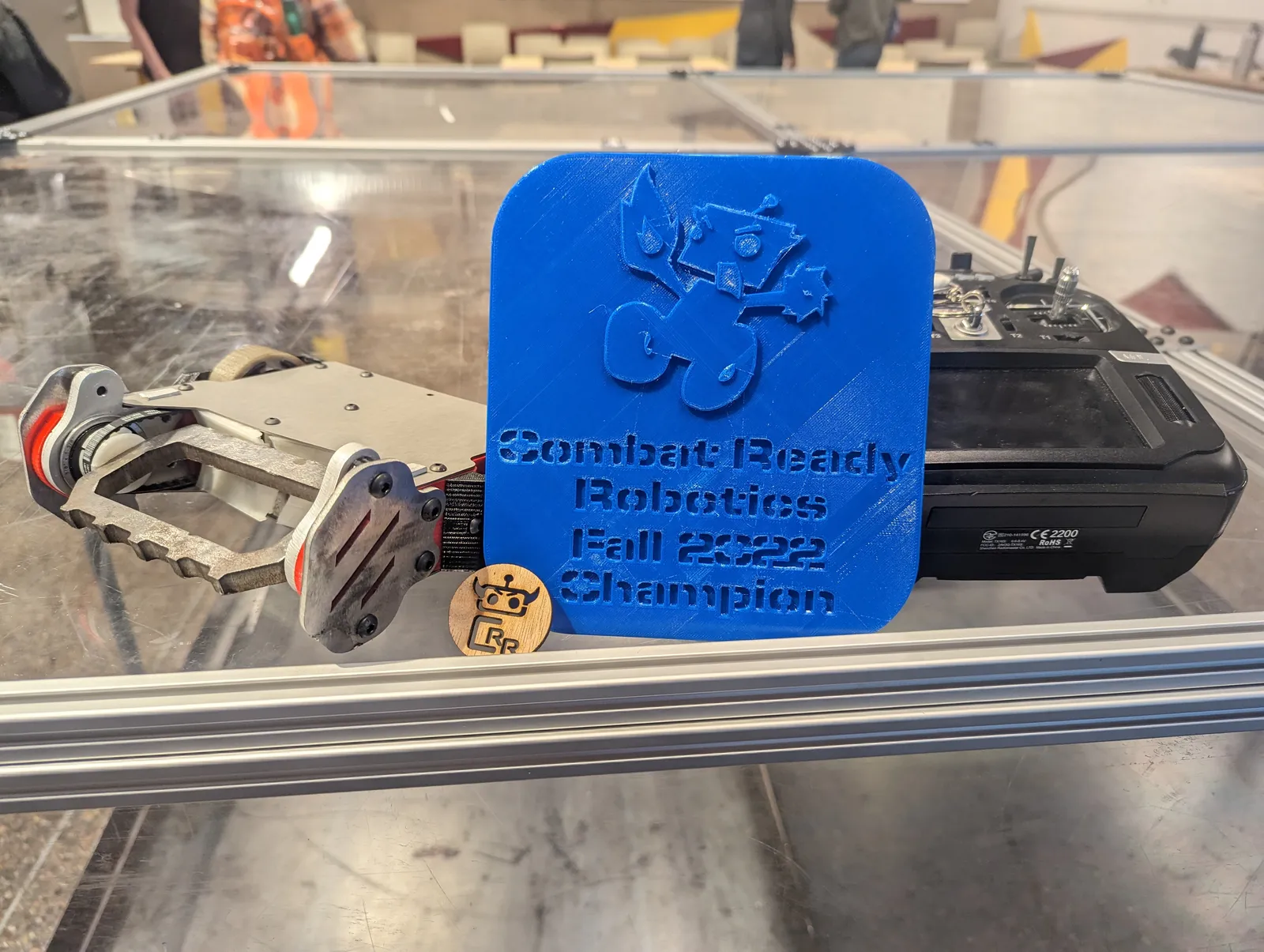
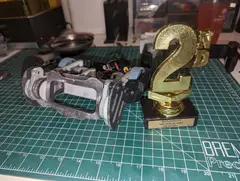
spinny boii won the ASU Robotics Club's internal student competition in 2022, taking home the trophy and bragging rights
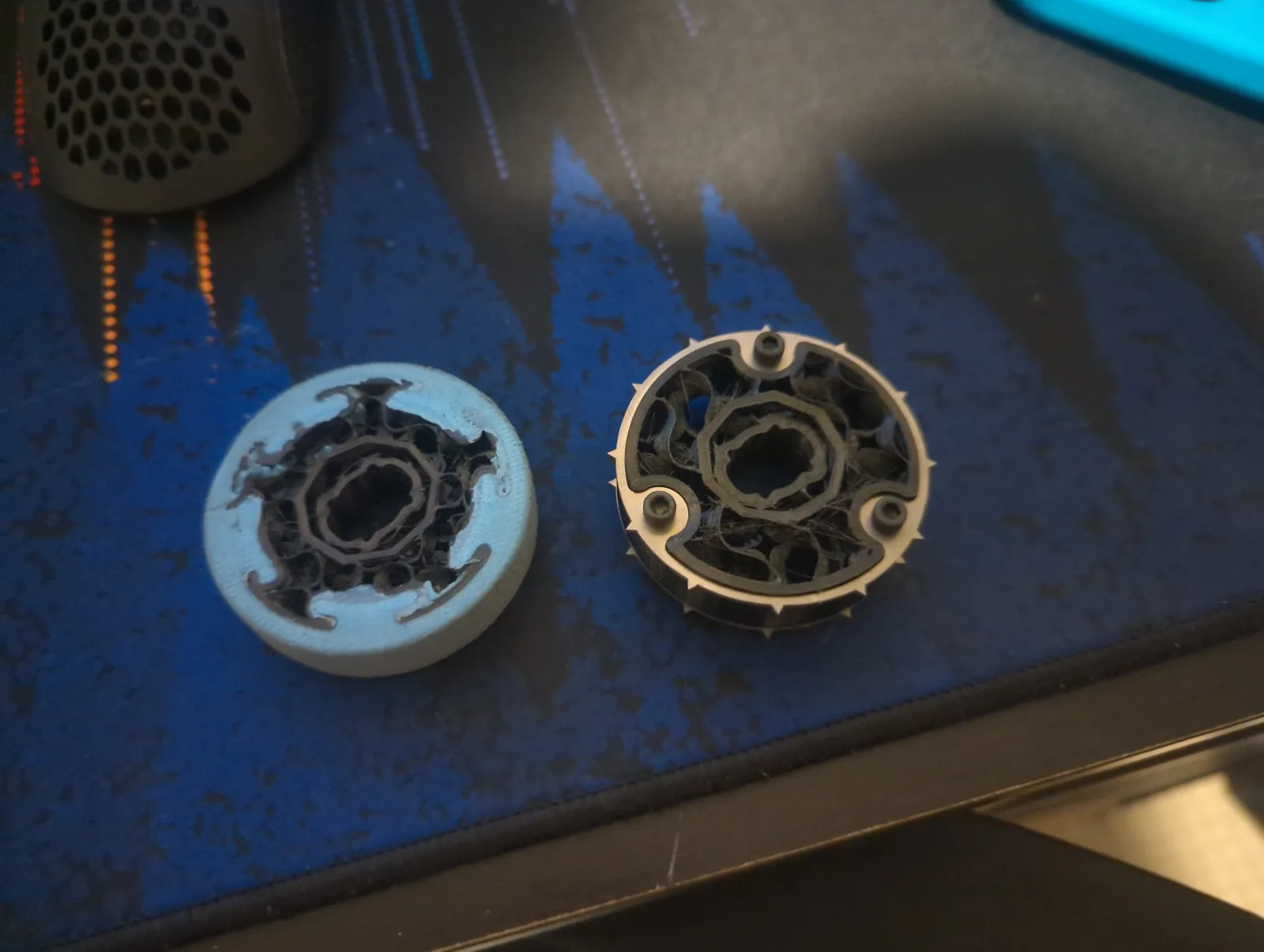
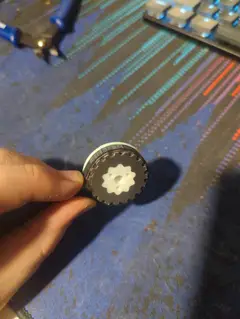
A TPU / cast urethane wheel (left) for metal floors, and a cleated wheel (right) for wood floors
Major Improvements
- Titanium top and bottom plates for improved rigidity and durability
- The additional stiffness helped prevent the frame from flexing and supports the weapon bearing mounts more effectively
- AR500 side armor, with aluminum swept-back ears for more reliable ground contact and better front-end durability than before
- Neodymium magnets mounted next to each wheel to massively improve traction on steel floors
- The smaller drive wheels tilt the whole chassis backward slightly, letting the magnets rest closer to the floor for better traction
- TPU wheels with cast urethane tread, for significantly better traction and durability than foam wheels
Issues
- The weapon drum could still eject from the bot if the front of was hit hard enough
- Even with the AR500 side armor and new top/bottom plates, the whole assembly could be hit hard enough to bend the steel and tear the titanium. This happened against Wumbo at ARC: RoboRumble 2023, and against Crescendo at Bay Area Bot Battles 2023
- The bot's inability to combat horizontal spinners was a major reason for moving from v2 to v3, and adding a proper dead shaft
- Titanium is heavy and expensive, and the top plates were the most frequently replaced part because of their failure mode when taking heavy horizontal hits to the face
- The weapon motor was slower than it should have been, resulting in less kinetic energy and less damage per hit
- The aluminum pulley teeth were made of a stack of individual laser-cut pieces, and after repeated hits, those pieces could clock relative to one another, ruining the tooth profile and causing the belt teeth to shear off
- This caused us to lose weapon functionality against Valinor at ARC: RoboRumble 2023
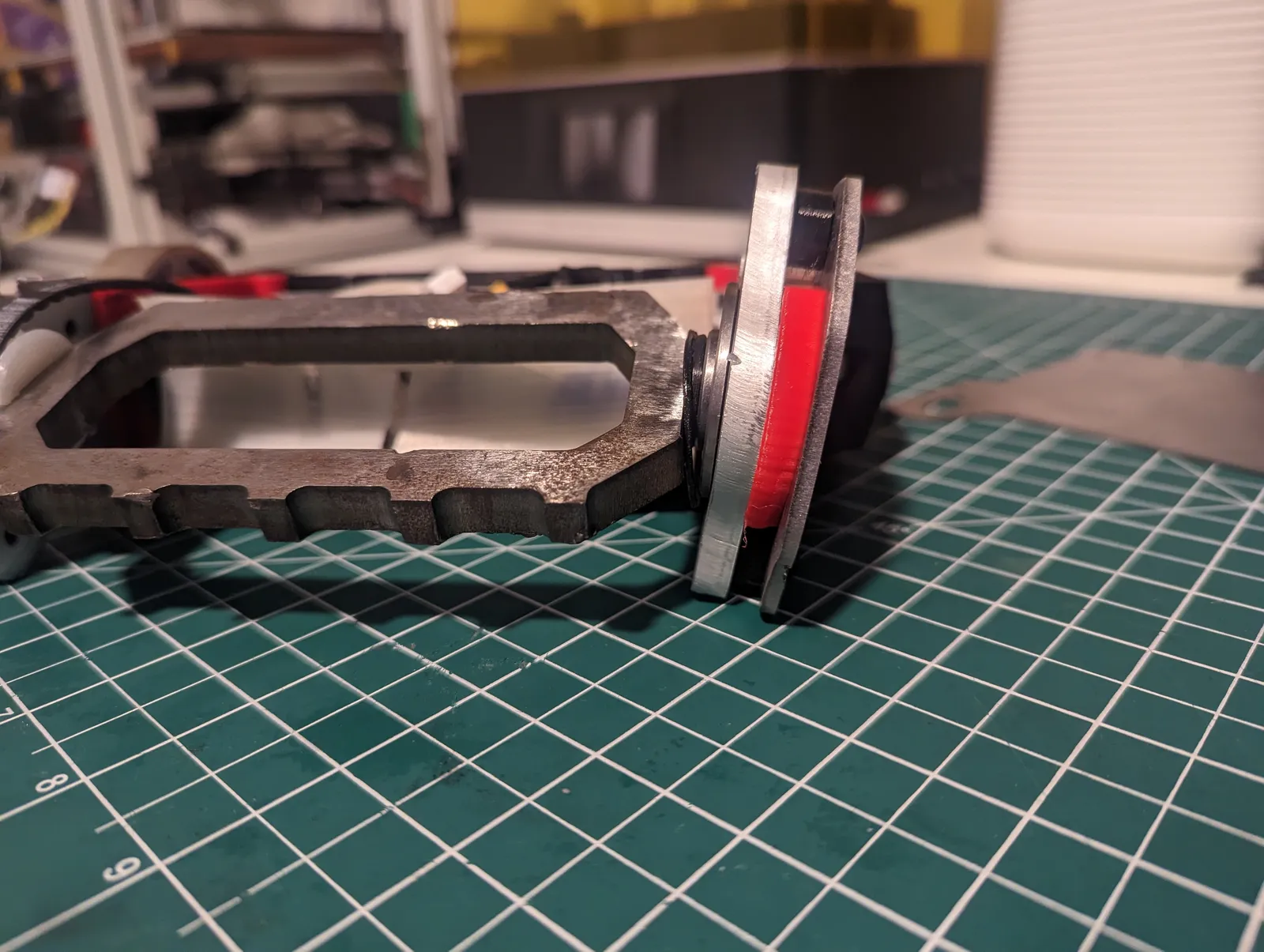
On large-ish horizontal hits, the front weapon support could bend
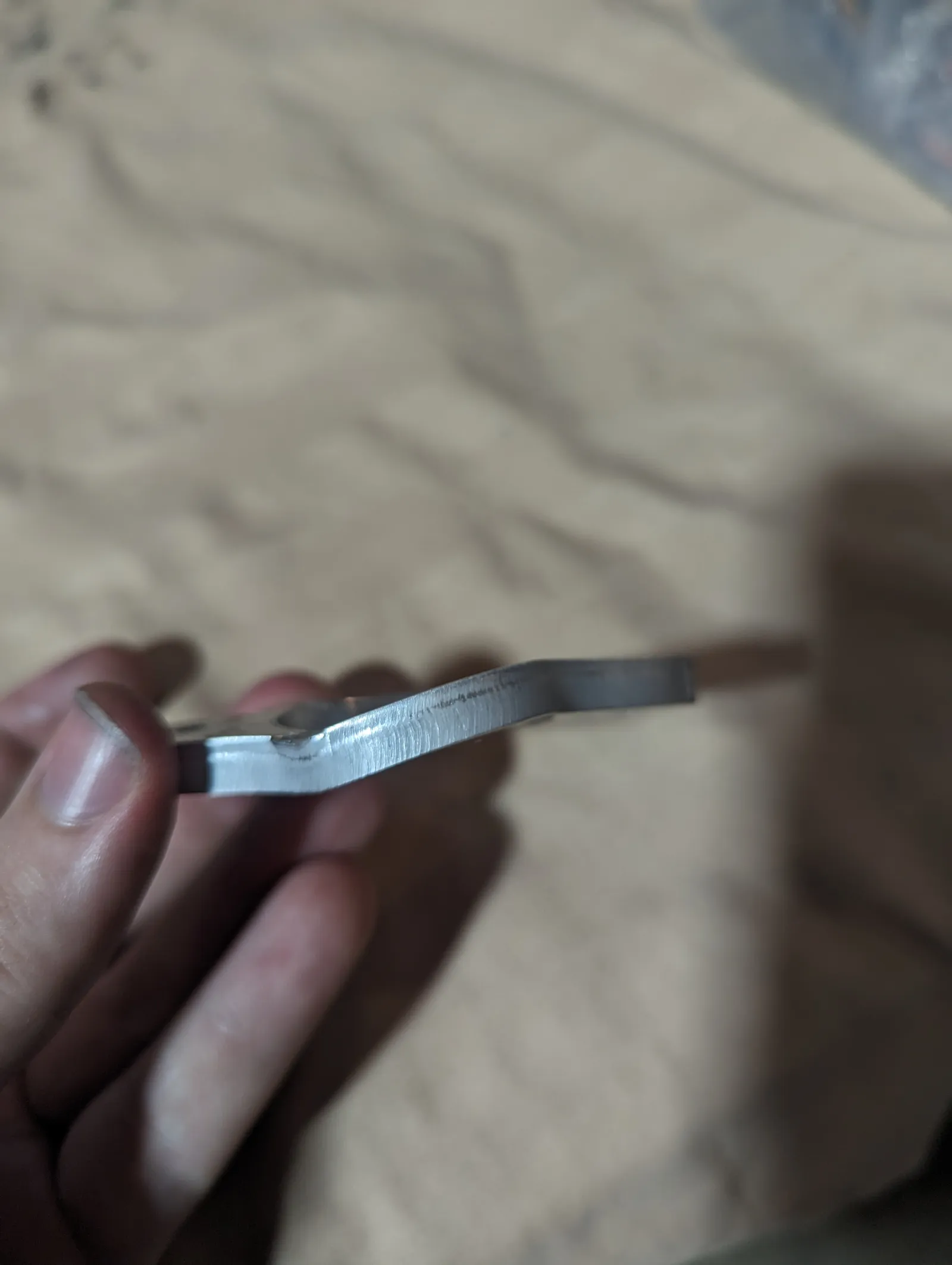
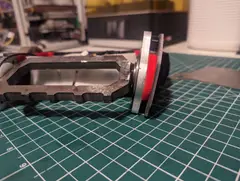
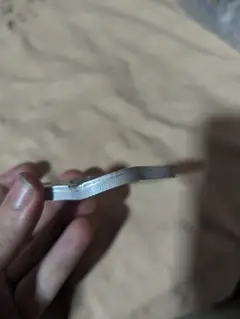
Crescendo bent the aluminum weapon bearing mount dramatically with a heavy horizontal hit
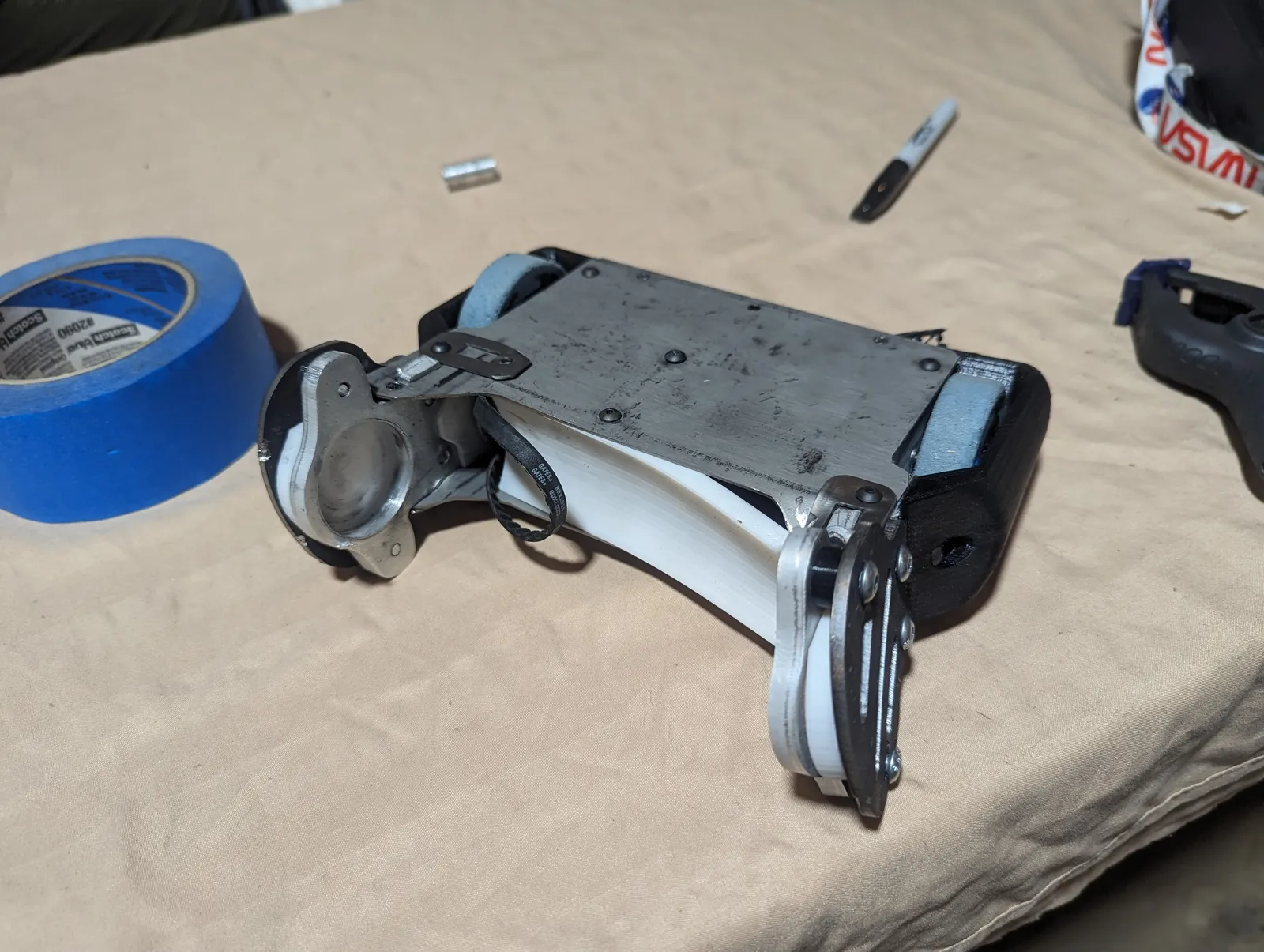
In that same hit, Crescendo tore the aluminum weapon bearing mount through the titanium, ejecting the drum and mangling the front of the robot. This was the last fight V2.1 had before we decided the design needed another major revision
Fight Video Playlists
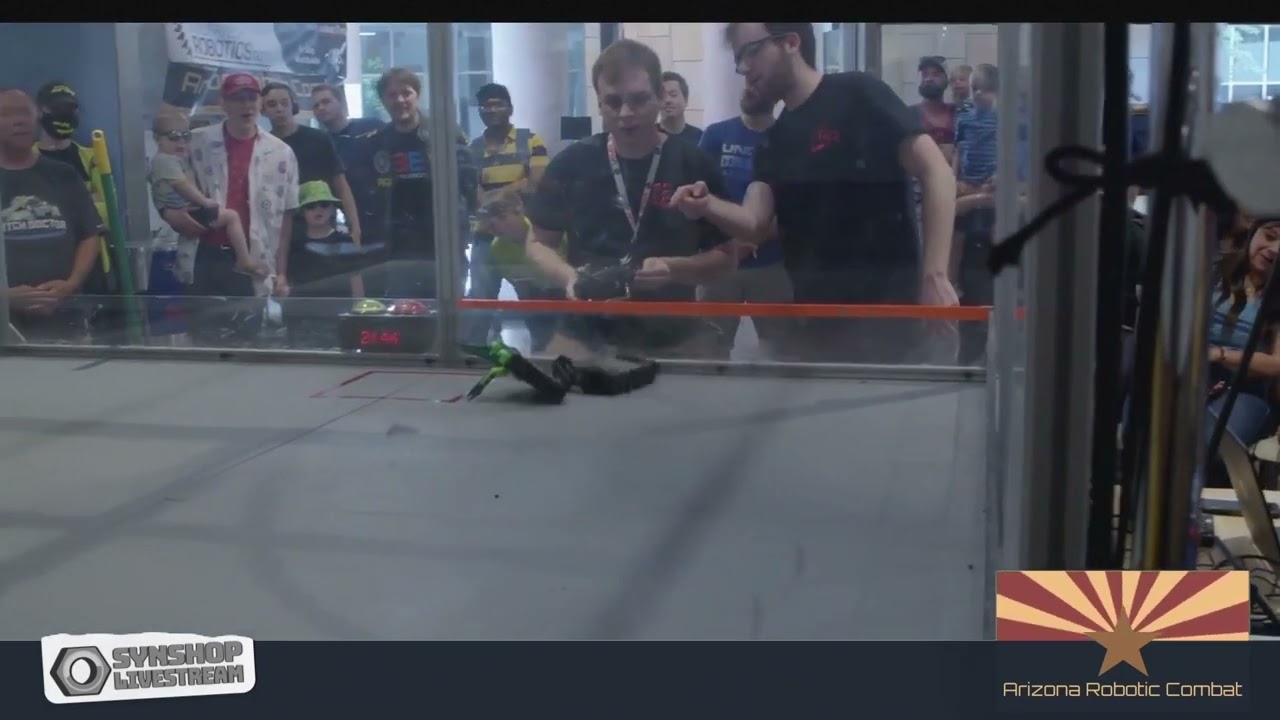
Version 2.0 - spinny boii's makeover
Complete redesign, converting to a 2WD drum spinner
Quick Facts
Summary
V2 was a complete redesign of the bot, converting spinny boii from a 4WD vertical spinner to a 2WD drum spinner. We decided to try and make the robot as simple and repairable as possible, and the best way to do that seemed to be to use a wide weapon so that the same set of frame rails could mount both the weapon and the drive motors. We ended up with 2 large, direct-driven foam wheels and a multi-piece 3D printed nylon frame. Each piece was relatively small, and could be replaced individually if it was damaged.
The weapon was a 3-inch diameter laser-cut AR500 beater bar, and it was mounted to two large lawnmower bearings housed in the front aluminum forks. This approach effectively used the weapon itself as a live shaft, and required that the bearing mounts be sturdily attached to the rest of the frame (this would prove challenging, to say the least). We also upgraded to brushless drive motors for more power and speed.
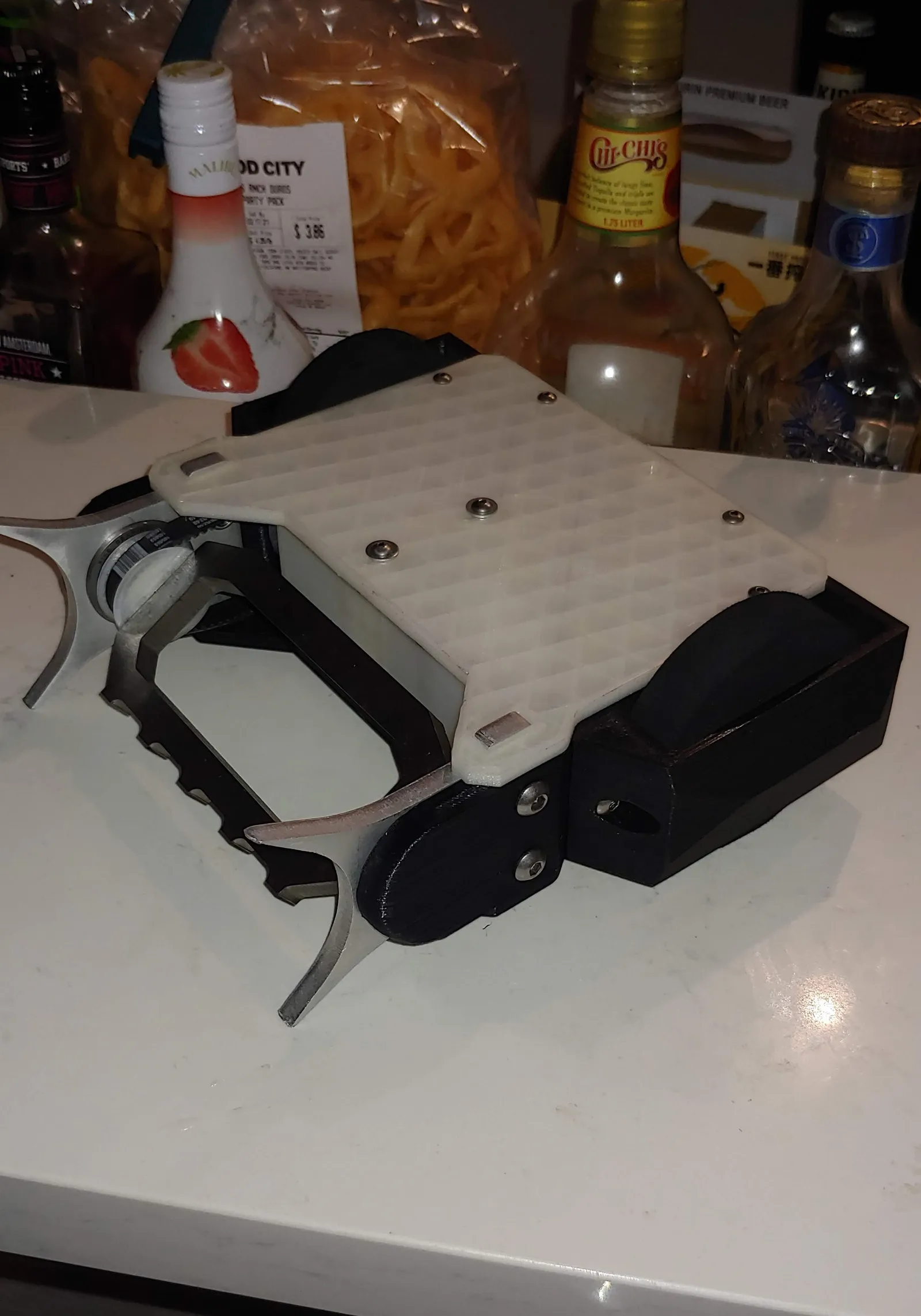
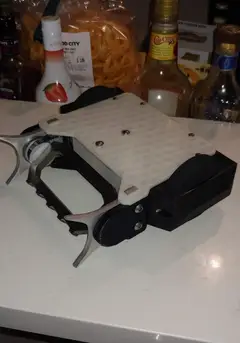
Version 2.0, converted to a 2WD drum spinner with a nylon frame, aluminum forks housing the weapon bearings, and laser-cut steel beater bar
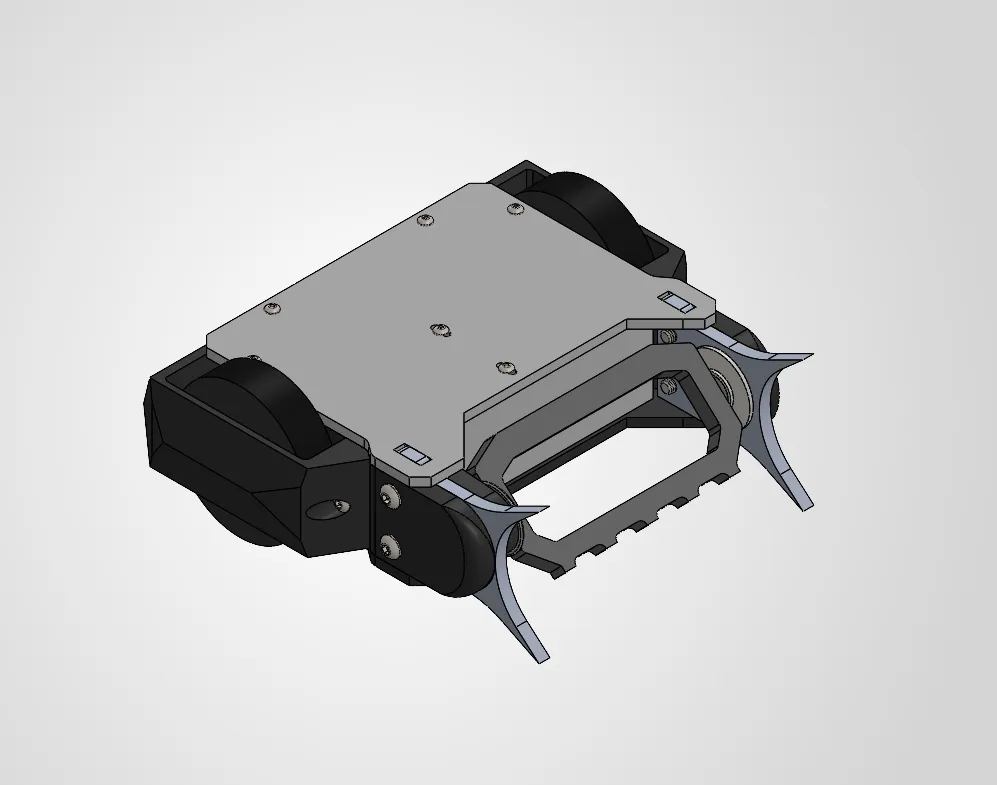
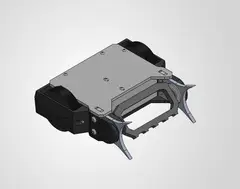
CAD model of the version 2.0 design
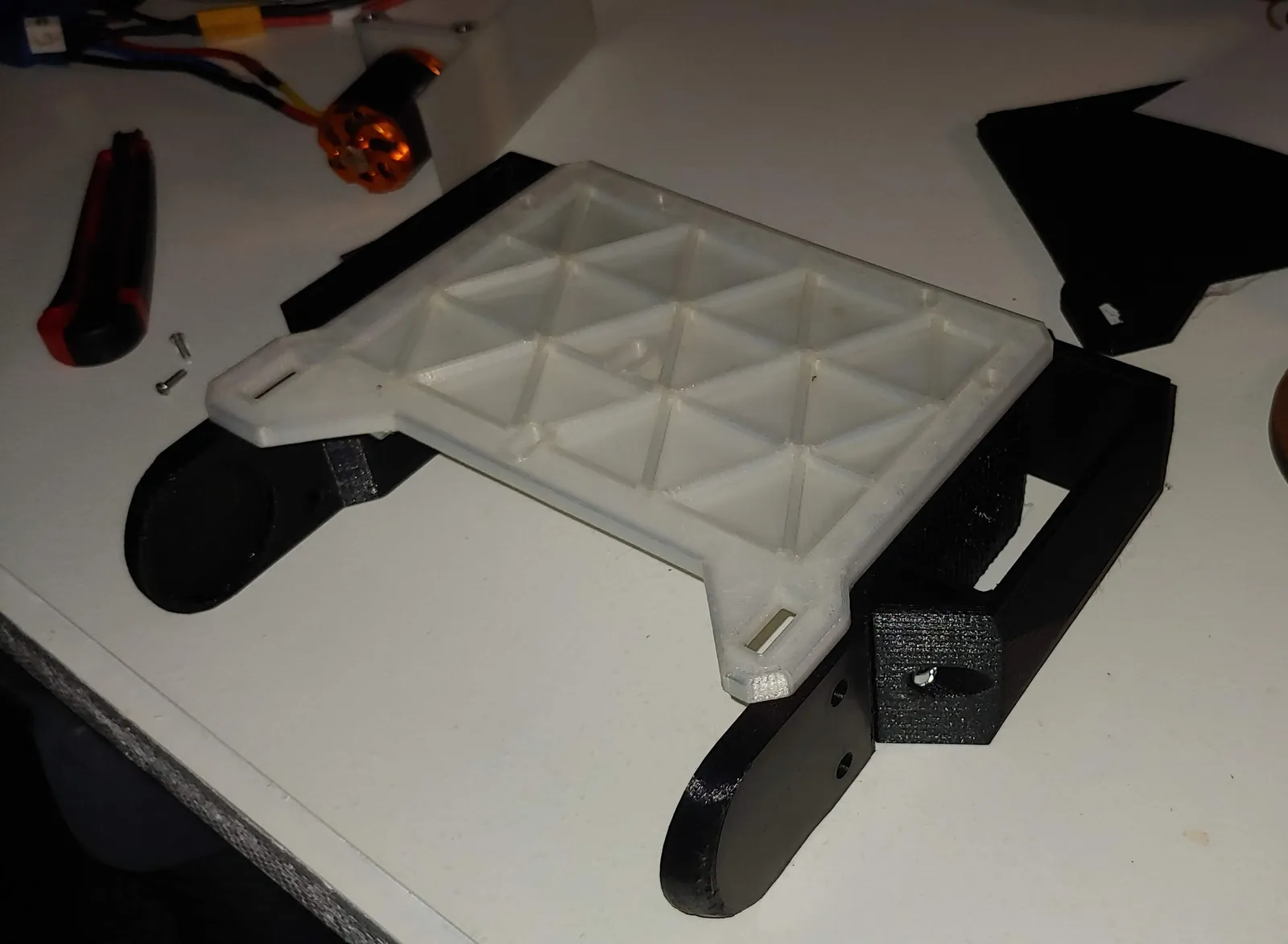
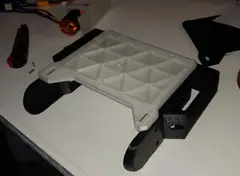
Testing the frame layout for version 2.0
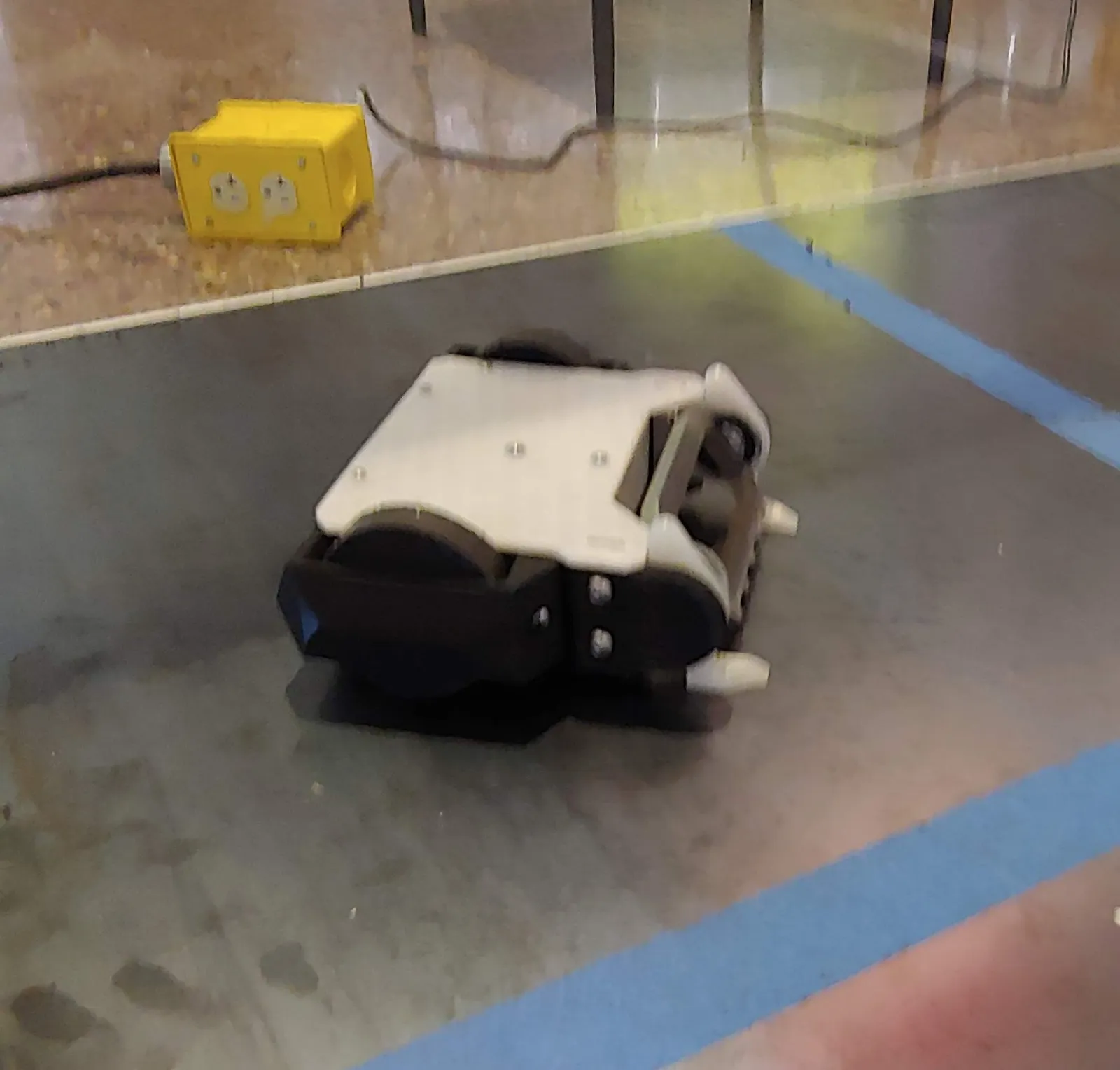
V2.0 with 3D-printed nylon uprights as a bandaid solution to the fork grinding issue
Issues
This version was a substantial improvement over V1, but it still had several issues:
- The weapon motor was much larger and slower than it needed to be
- The aluminum forks that held the weapon bearings were too sharp, and tended to wear down while driving on the floor, which risked causing the weapon to hit the floor
- We temporarily "fixed" this immediately before the competition by switching to 3D-printed nylon forks with flat bottoms, but this proved far too weak
- The foam wheels and overall robot geometry gave us poor traction, so the bot was difficult to drive precisely
- The weapon containment relied on the strength of the bearing mounts, which were not strong enough on their own to survive direct hits without buckling. This could lead to the weapon ejecting from the bot
That last point was especially prominent during spinny boii v2.0's second and last match against Caleb Hecht's robot "Crescendo."
Version 1.0 - spinny boi's first steps
It barely drove, but the spinner worked, and we learned a lot
Quick Facts
Summary
This version of spinny boi (we added an "i" for each major version of the bot) marked my first ever attempt at a combat robot. Given that my teammate and I were college sophomores at the time, it was also one of our earliest from-scratch design projects. On top of this, we were running a series of workshops to teach ASU students how to build combat robots, and organizing the culminating tournament of the program. This meant we spent far more time helping other members of the robotics club than we did working on our own robot. As such, spinny boi v1 has several flaws in both design and execution. However, it proved to be a valuable learning experience, and it kickstarted our journey into combat robotics.
Design and Build
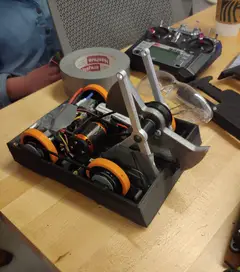
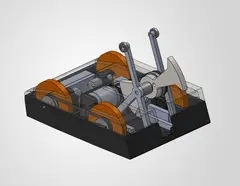
Version 1 adopted a 4-wheel drive chassis with a 6-inch diameter AR500 steel weapon. The frame consisted of 2 large 3D-printed NylonX pieces in a clamshell arrangement, with aluminum weapon supports. The drive system consisted of two Silver Spark gearmotors direct-driving the back wheels, with round belts to transmit power to the front wheels. The weapon was powered by a DYS 3548 motor via a round belt. The front of the bot was angled with the intention of adding a titanium wedge, but we didn't end up having enough weight to spare.
Because we were so busy helping other students with their bots, our final 3D-printed NylonX chassis pieces finished printing the night before the competition. They were quite warped, impacting our ground clearance, so the bot barely drove. However, the vertical spinner worked well, and we were able to land a few hits on our opponents.
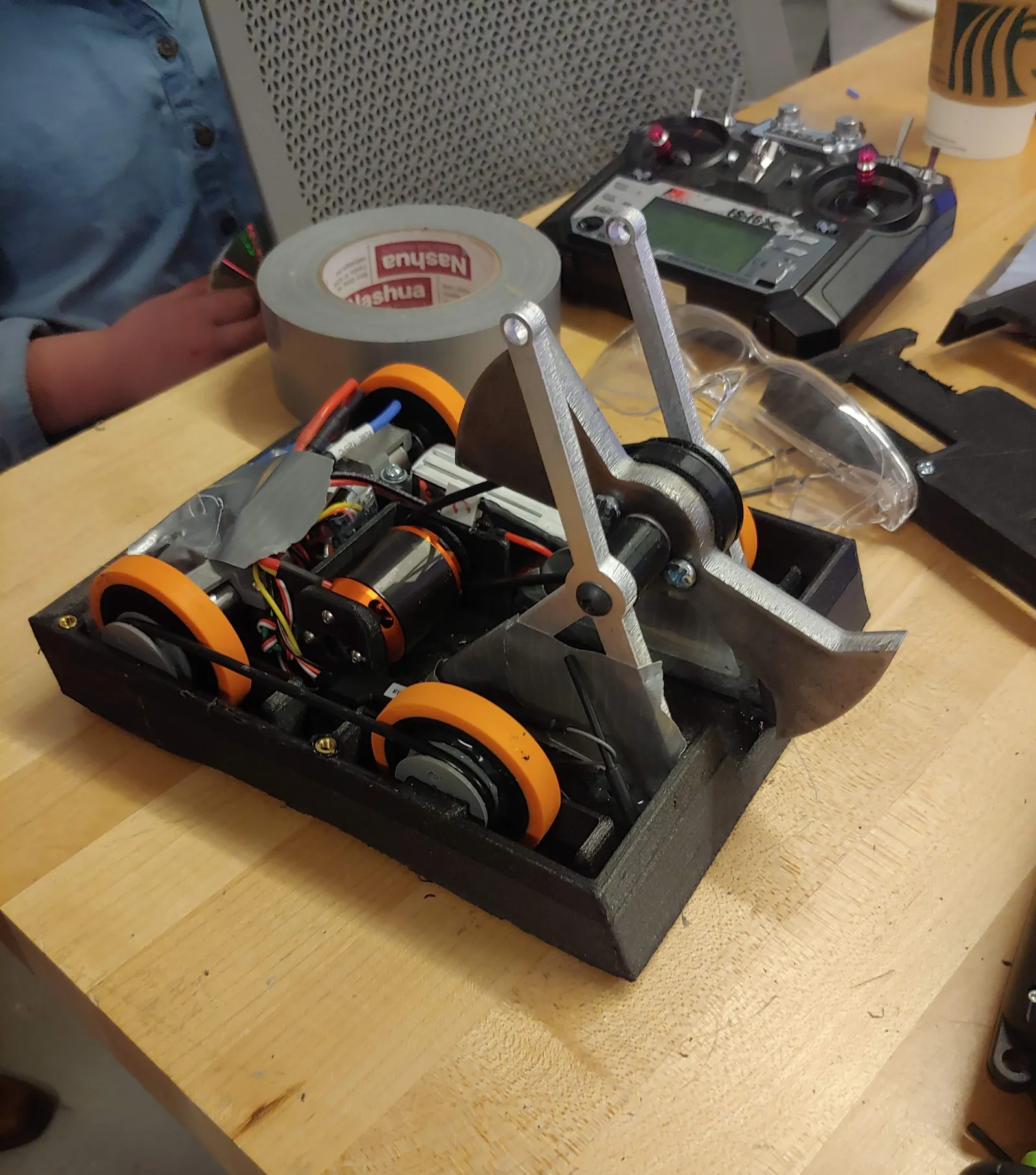
Version 1.0 with open top showing internal components. It's not a college engineering project if it's not held together with at least a little duck tape
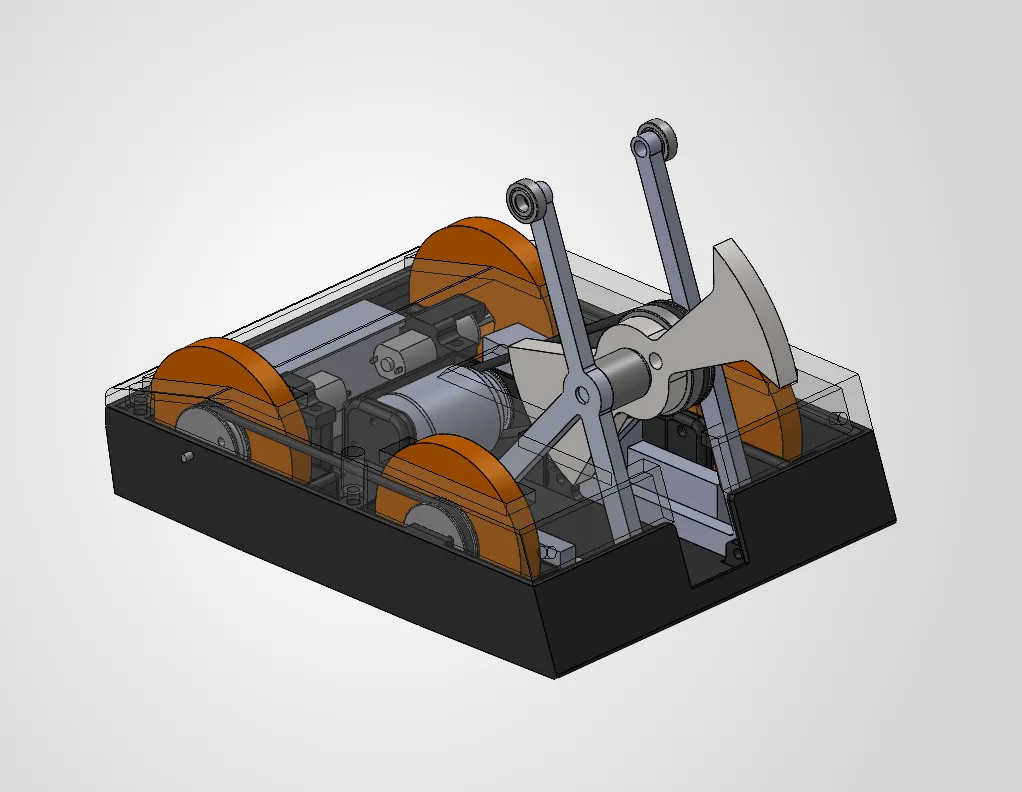
CAD model of the version 1.0 design, with a transparent top cover showing the internals
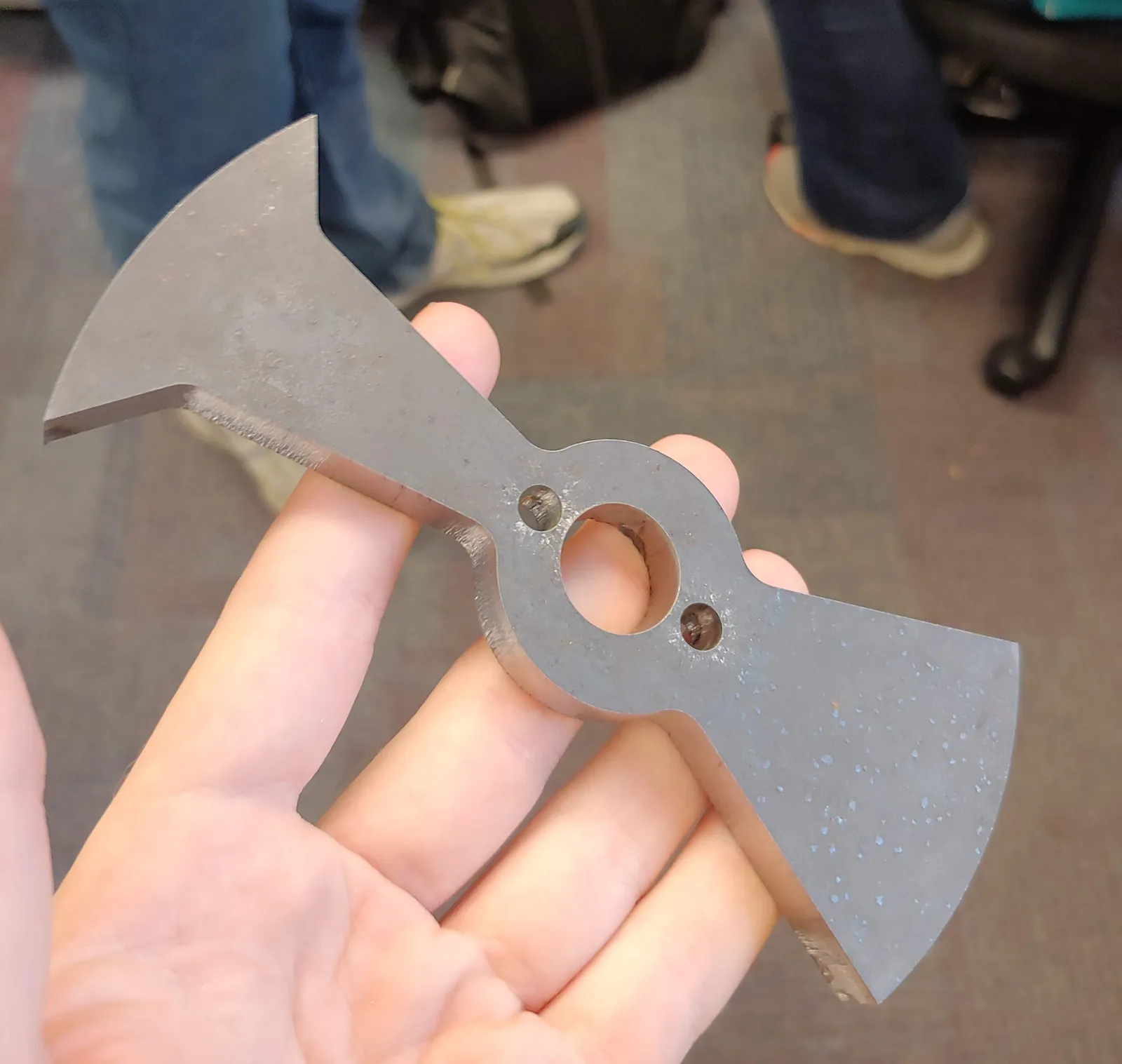
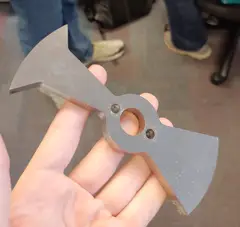
The vertical spinner weapon is laser-cut out of AR500, ordered from SendCutSend
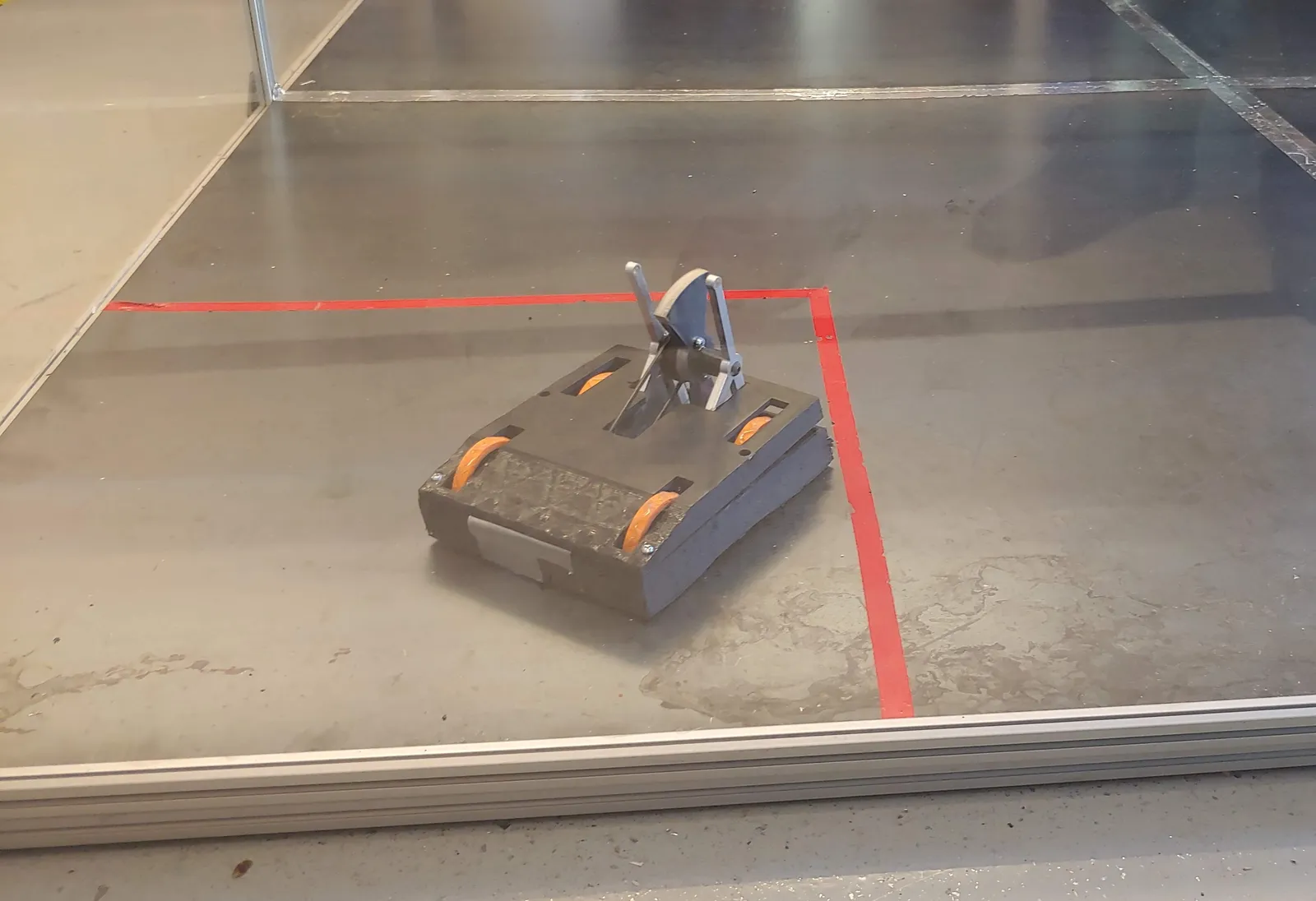
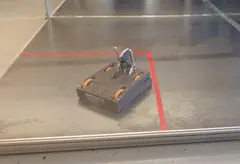
spinny boi loads into the arena for its first match
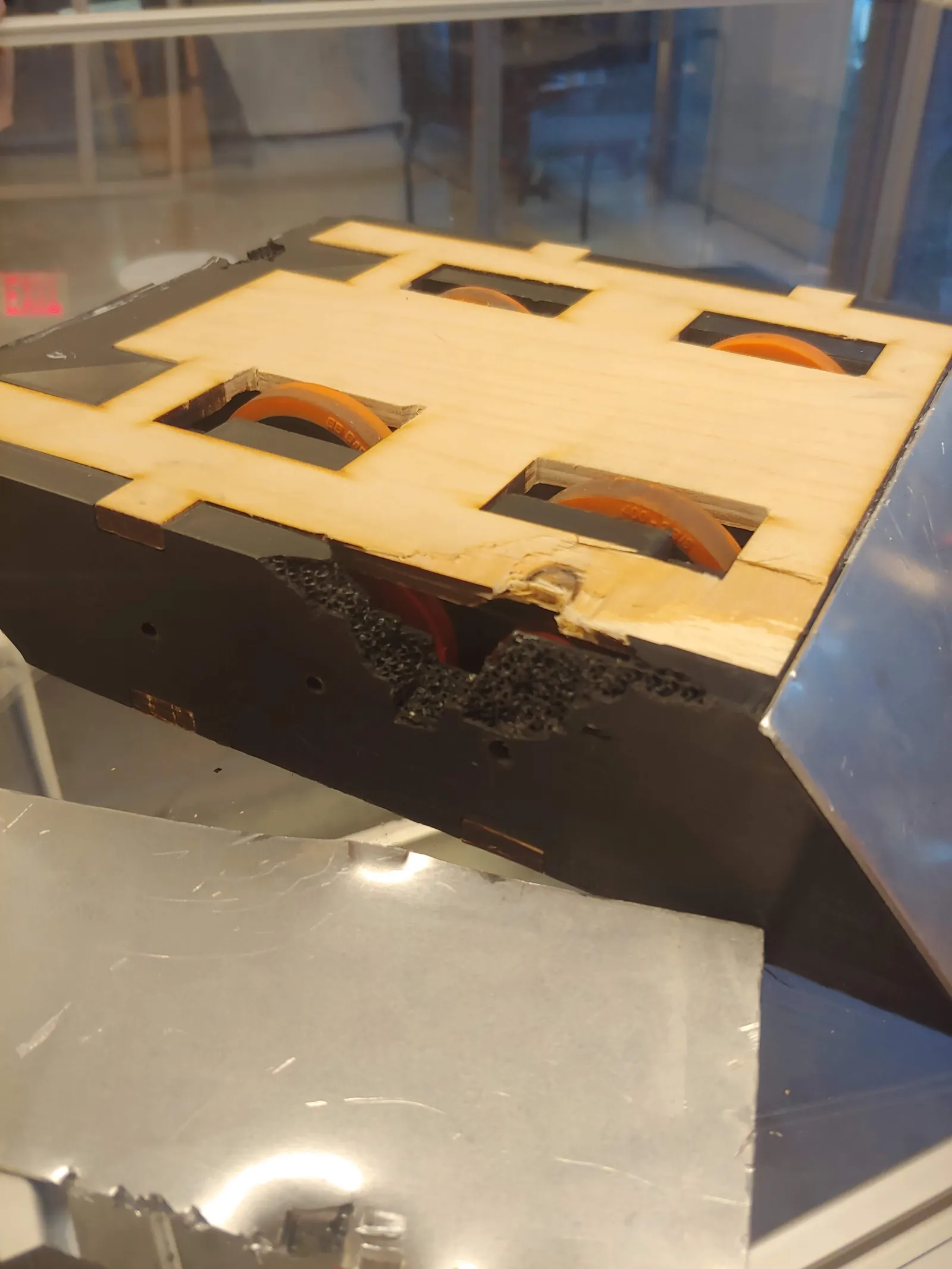
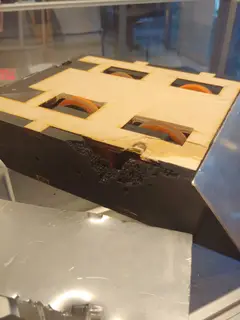
Damage dealt to the opposing robot during one of our first fights
Learnings
- Clamshell chassis design is not volume-efficient, and irregular internal mounting features that are difficult to access for repair. It also has large bottom surfaces that are difficult to print out of NylonX without warping, and any significant damage means at least half the chassis needs to be replaced.
- More simple pieces that can be replaced individually are better for repairability and printability
- The Silver Spark gearmotors are definitely not suitable for 3lb combat robots. They are underpowered and prone to gearbox failure
- We only used them because of a last-minute sourcing issue, and we learned our lesson the hard way. Upgrading to larger motors and gearboxes in the next version was a priority
- Round belts are prone to slipping under load, and they stretch over time
- We moved to fiber-reinforced timing belts in later versions
- BaneBots wheels are grippy, but heavier than necessary
- Our weapon ESC was much larger than necessary, and we could save weight and space by moving to a drone ESC in later versions
- Wire management needs pre-planning!
- Our clamshell could never fully close because our wiring was unoptimized and bulky
- Final assembly should be done more than 1 day in advance!